














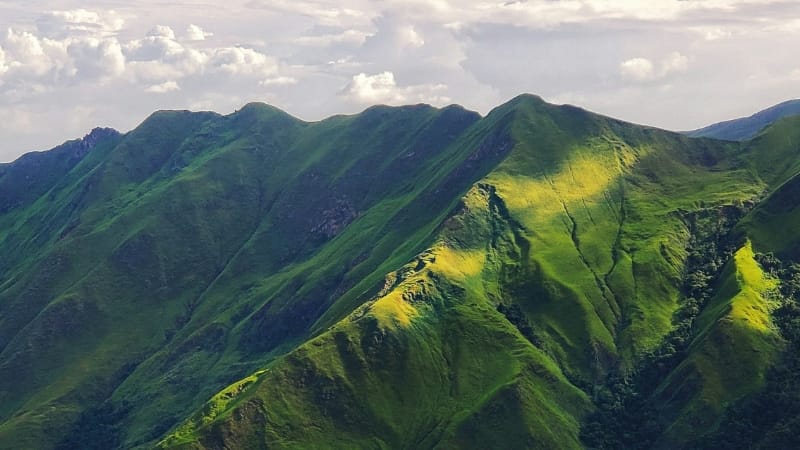
Illegal logging in Bolivia's forests is contributing to deforestation, biodiversity loss, and environmental degradation. High-value woods are being harvested almost to extinction, pushing loggers deeper into protected areas. Parks at risk include Madidi, Carrasco, Ambaró, and Isiboro-Secure, all of which are adjacent to the Amazon region. In Madidi and Ambaró, an entire trafficking network has sprung up around the pilfering of valuable mara wood (Swietenia macrophylla), also known as big-leaf mahogany. The tree species has been classified as "vulnerable" on the International Union for Conservation of Nature (IUCN) Red List. It has also been granted Appendix II protection under the Convention on International Trade in Endangered Species (CITES), indicating that its trade must be regulated to prevent exploitation that threatens its survival. In 2011, the head of Bolivia's forests agency warned that the overexploitation of mara wood had left the species on the brink of disappearing. According to an investigation by Eduardo Franco Berton, a Bolivian environmental journalist who has investigated the illicit timber trade, traffickers are still financing the extraction of mara wood. The pilfering requires organized crews that head deep into national parks, crossing rivers and canyons, to reach isolated stands of mara trees. Loggers chop down trees that can reach up to 45 meters in height and then use buzzsaws to cut them into planks measuring 3 to 5 meters in length. Carriers then transport these planks on their backs for up to two miles across challenging terrain. Once the carriers reach a river drop-off point, the timber is strung together by rope to form long rafts called callapos. The rafts carry 150 planks on perilous journeys up to three days on Ambaró's Yapacani, Ichilo, and Mataracu rivers. The trips can earn sailors some $700. Trucks then pick up the timber, bringing it to warehouses. The best wood is selected and smuggled to neighboring countries. From Madidi, located northwest of La Paz, the wood is moved to San Pedro de Putina Punco, Peru, while wood extracted in Ambaró is moved across the long porous border between Bolivia and Brazil's Mato Grosso state. The timber is often concealed in other truck cargo. Timber that reaches Brazil and Peru has been exported to international markets, such as China and the United States.


The Environmental Crimes Financial Toolkit is developed by WWF and Themis, supported by the Climate Solutions Partnership, a collaboration between HSBC, World Resources Institute and WWF.