

Platform

Resources

Private credit is moving fast. So is the fraud hidden inside it.
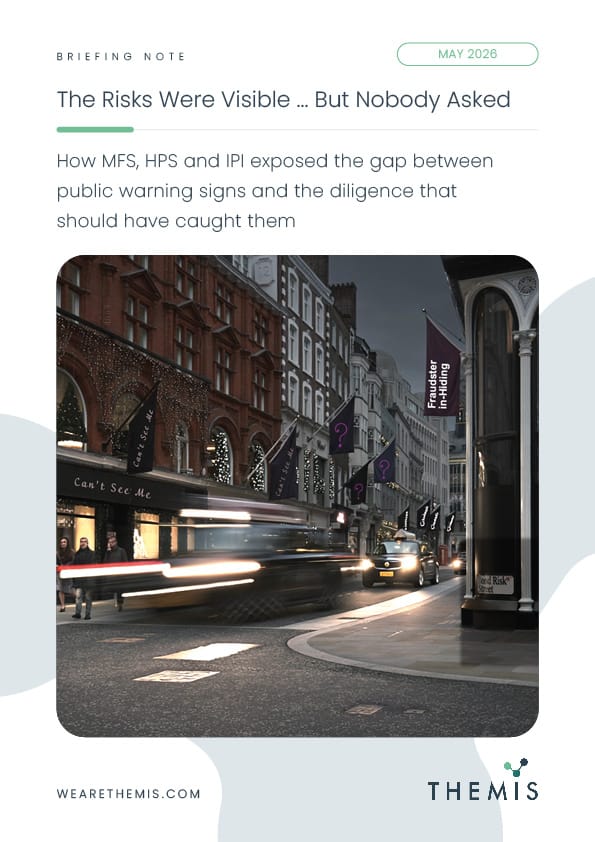
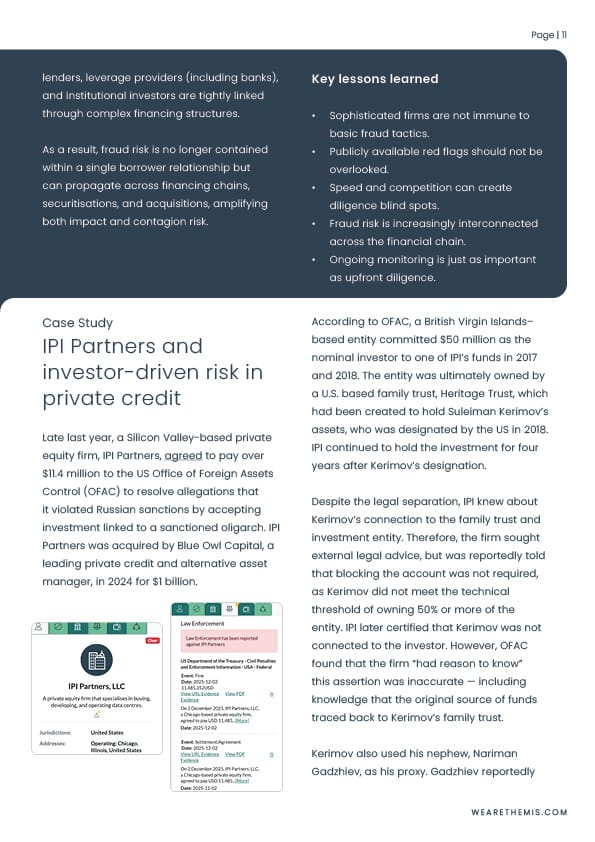
In April, Barclays pulled back from lending to riskier borrowers after a £228 million hit tied to the collapse of UK mortgage lender Market Financial Solutions - with its CEO warning of increasingly elaborate borrower-linked fraud emerging across the sector. It wasn't an isolated incident. At HPS Investment Partners, over $400 million was extended to a borrower whose fabricated invoices and falsified documentation went undetected until an analyst spotted the discrepancy - after the credit had already been extended. At IPI Partners, sanctions exposure linked to a designated Russian oligarch sat inside a technically compliant structure for four years before OFAC came knocking.
Three firms. Three different failure modes. One common thread: the warning signs were there.
They appeared in public filings, adverse media, regulatory records, and ownership structures - visible to anyone who looked closely enough, and missed by some of the most sophisticated institutions in the market. The issue wasn't a lack of information. It was a failure to systematically connect and interrogate it, under the pressure of fast-moving deals and competitive capital deployment.
This briefing examines what went wrong, what was missed, and what private credit firms need to do differently - before the next case makes the headlines.

Risk moves fast. Capital moves faster. This briefing is for the firms that can't afford to find out the hard way.










Lorem ipsum dolor sit amet, consectetur adipiscing elit, sed do eiusmod tempor incididunt ut labore et dolore magna aliqua. Ut enim ad minim veniam, quis nostrud exercitation ullamco laboris nisi ut aliquip ex ea commodo consequat. Duis aute irure dolor in reprehenderit in voluptate velit esse cillum dolore eu fugiat nulla pariatur.
Block quote
Ordered list
Unordered list
Bold text
Emphasis
Superscript
Subscript