Platform

Resources

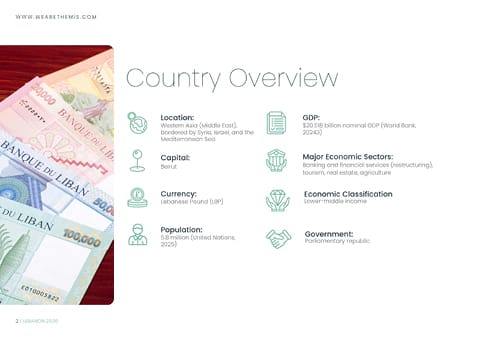
Lebanon faces one of the world's worst economic crises since the mid- 1800s, with its financial system having collapsed following decades of systematic mismanagement. The World Bank has characterised Lebanon's banking model as a "Ponzi scheme" run by political elites to systematically capture national resources. Since 2019, the Lebanese pound has lost over 95% of its value against the dollar, bank deposits have declined by $31 billion, and approximately 74% of the population now lives in poverty. The cash economy has become entirely dominant, with formal banking nearly non-functional for ordinary citizens.
The economy historically relied on services, particularly banking and tourism, with an oversized financial sector relative to GDP. Remittances from Lebanon's extensive diaspora traditionally provided crucial foreign currency inflows. However, capital controls imposed since 2019 have trapped depositors' savings, effectively wiping out the middle class. The economic crisis, which began in 2019, continues to devastate Lebanese society. Lebanon's gross domestic product fell 38% between 2019 and 2024, with a peak annual inflation rate of 221% in 2023. In addition, the 2023/24 conflict with Israel is estimated to have caused US$8.5 billion of damage.
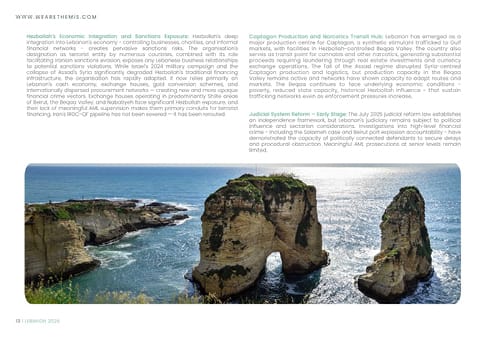
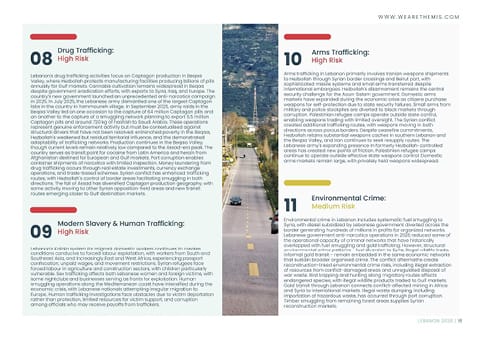
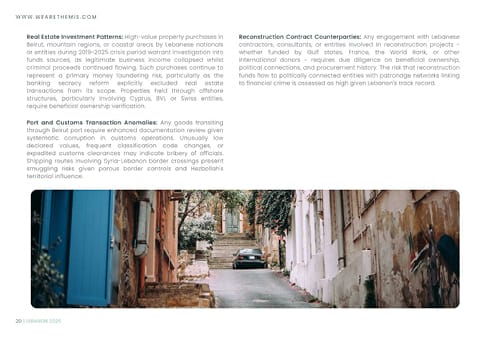
Primary methods of abuse
High-risk sectors
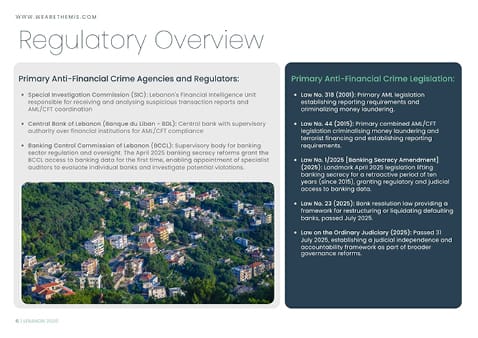
Relevant regulatory responses
Financial crime & compliance teams
Investment committees and operations teams assessing investment into new markets and/or potential expansion into new markets
Financial institutions onboarding clients across jurisdictions
Consultants and advisory professionals
Enhanced due diligence teams

Comprehensive jurisdictional threat overview
In-depth assessment of financial crime typologies such as money laundering, fraud, terrorist financing, tax crime and more.
Detailed sectoral risk analysis
Sector-by-sector evaluation of risk exposure, with the option to zoom in on specific industries (e.g. crypto, real estate, the precious metals sector, legal and other professional business services).
Typology deep dives and red flags
Detailed analysis of real-world typologies, high-risk behaviours and jurisdiction-specific red flags.
Customised watchpoints and recommendations
Forward-looking insights and actionable advice tailored to your business model, client profile, or regional footprint.