Platform

Resources

Cyber-enabled financial crime - where digital technologies intersect with illicit financial activity - is rapidly emerging as one of the most significant global threats to nations, businesses and communities. Each year, criminals launder more than US$2 trillion and steal over US$1 trillion through fraud, increasingly using cyber capabilities to operate at unprecedented scale and speed.
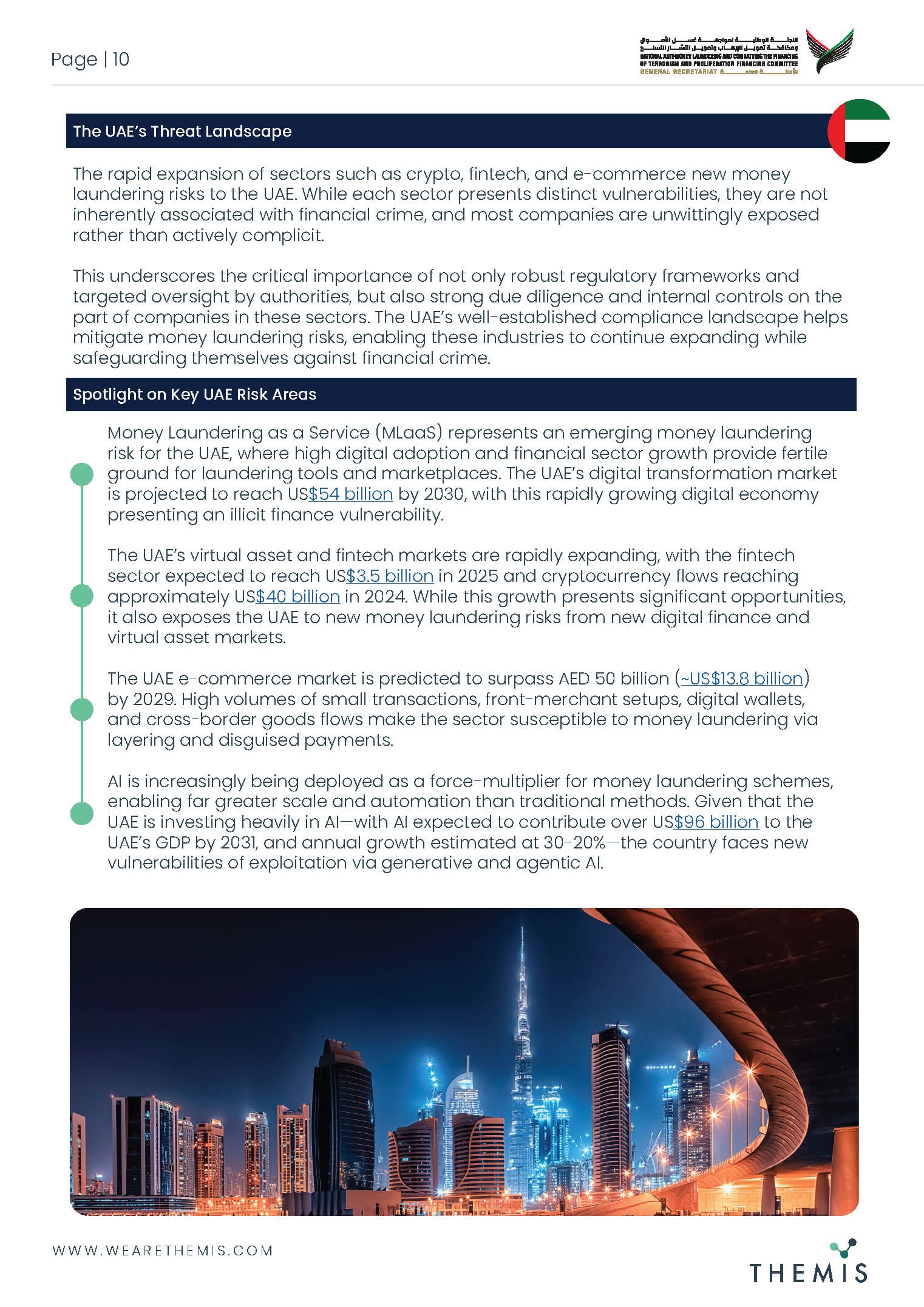
For the UAE - one of the world’s most dynamic financial and technological gateways - this threat is especially acute. The rapid growth of fintech, virtual assets, AI and e-commerce, combined with high volumes of cross-border digital transactions, is expanding both opportunity and exposure to cyber-enabled money laundering, terrorist financing, proliferation financing and sophisticated predicate crime.
This report examines how criminals are exploiting virtual assets, synthetic identities, deepfakes, fraud-as-a-service platforms and AI-powered automation to move illicit funds, scale scams and evade detection. It also highlights the growing convergence between cybercrime, financial crime and national security risk; and the urgency for regulatory vigilance, private-sector controls and continuous upskilling to ensure innovation does not outpace safeguards.
This white paper provides a detailed examination of the UAE’s exposure to cyber-enabled financial crime across three interconnected threat areas: money laundering, terrorist and proliferation financing and cyber-enabled predicate crimes. It covers:
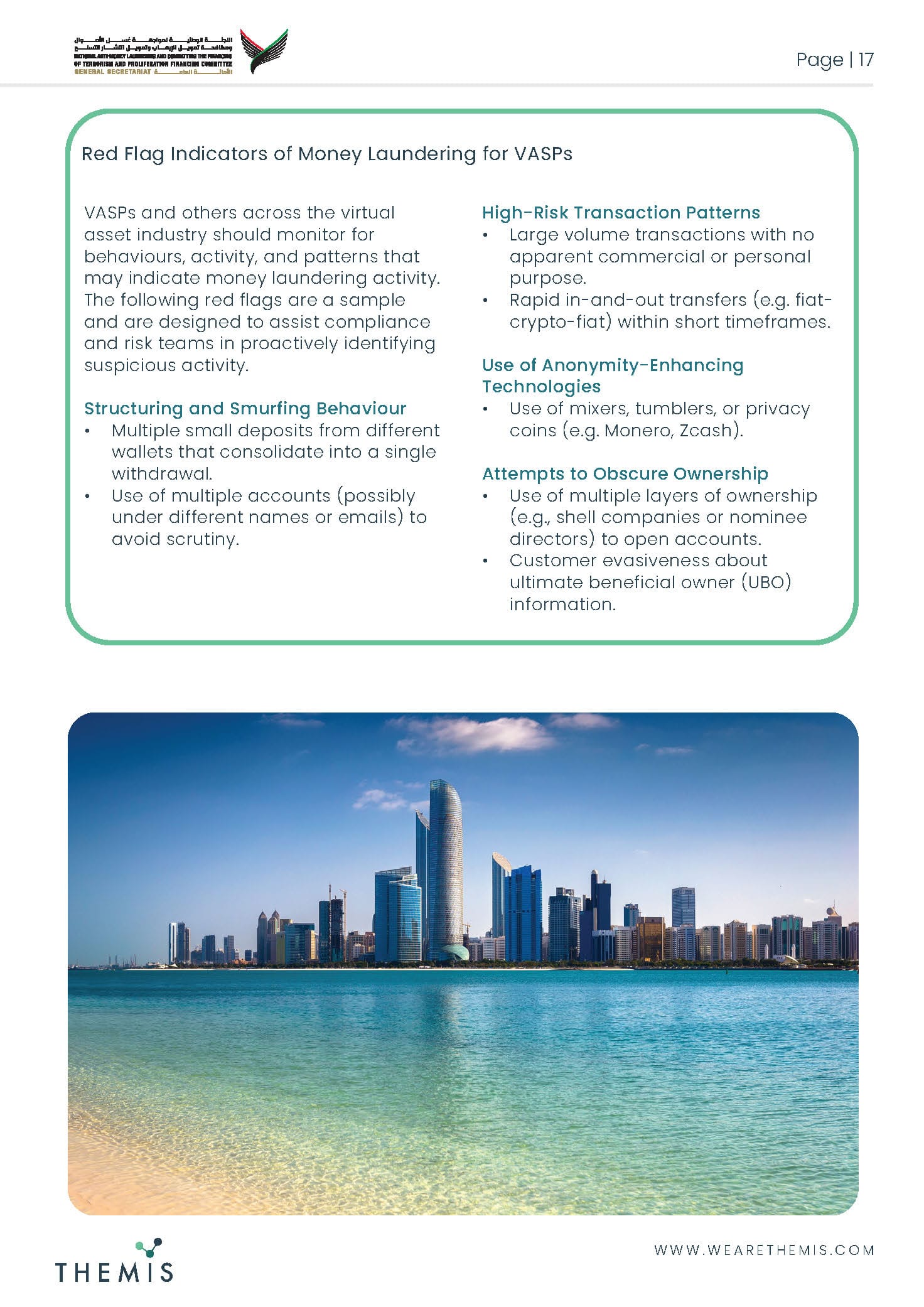
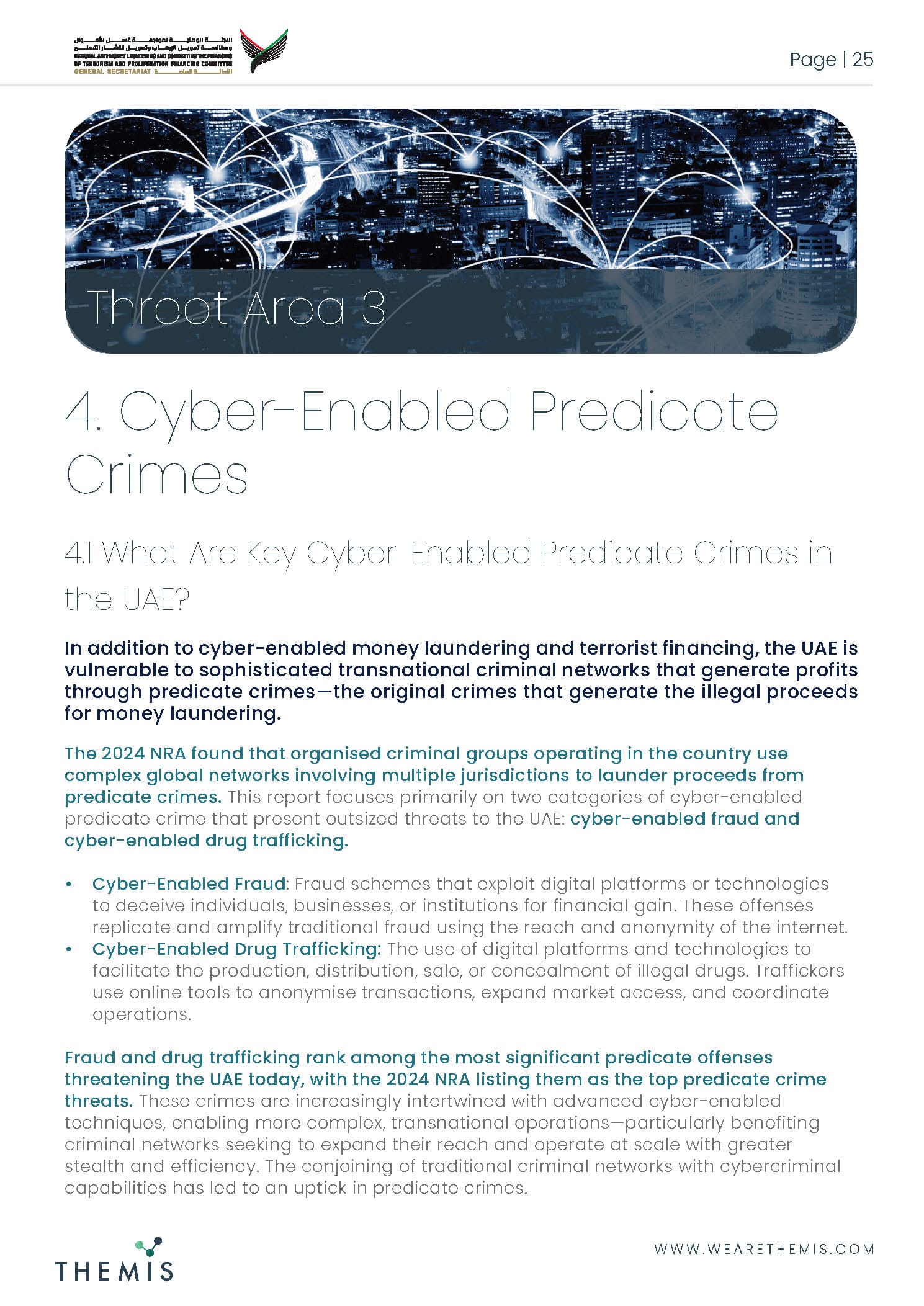
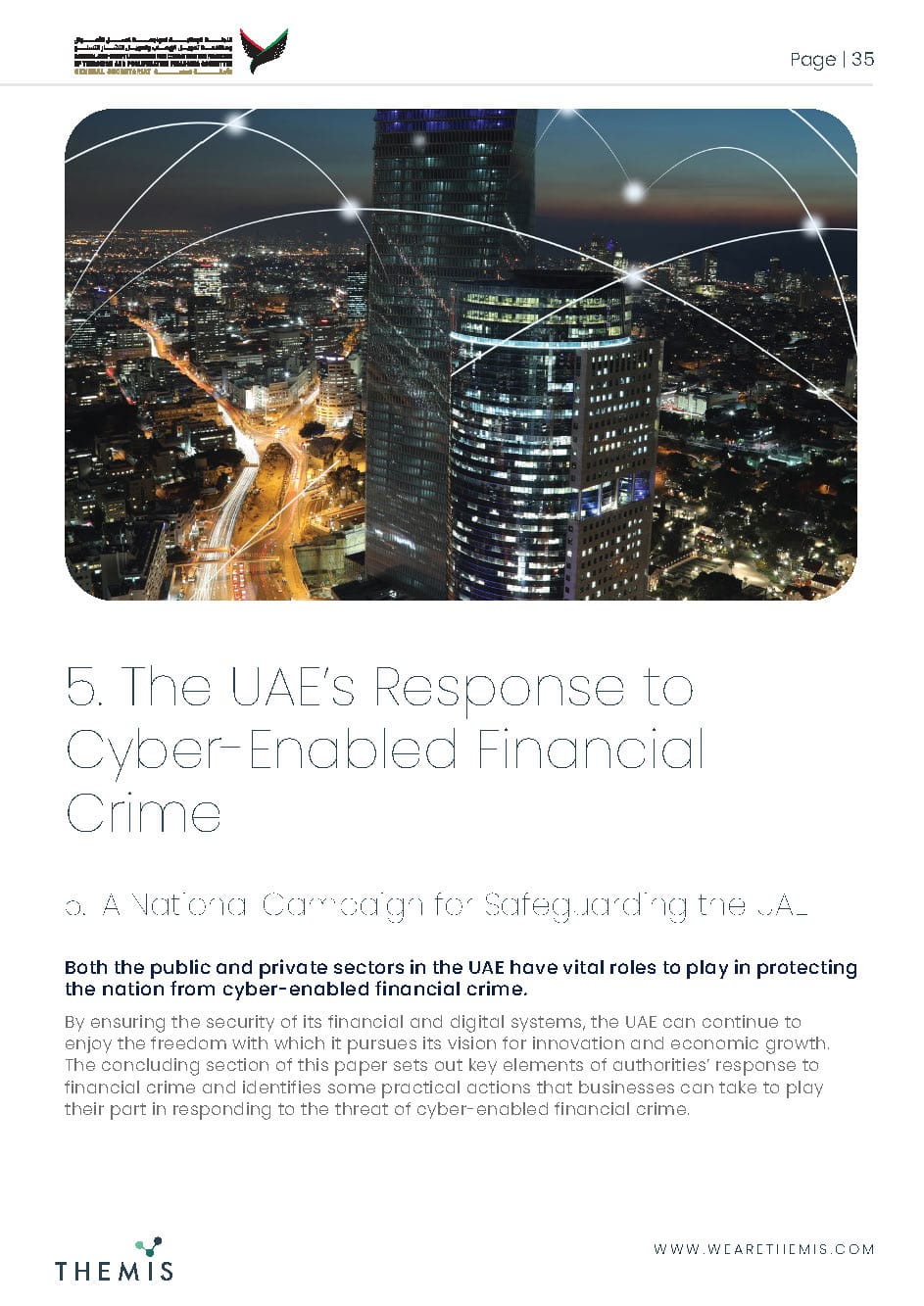
Gain valuable insights with our latest publication. Get your copy now to explore key findings, expert analysis, and practical recommendations that help you stay informed and ahead of the curve.









Lorem ipsum dolor sit amet, consectetur adipiscing elit, sed do eiusmod tempor incididunt ut labore et dolore magna aliqua. Ut enim ad minim veniam, quis nostrud exercitation ullamco laboris nisi ut aliquip ex ea commodo consequat. Duis aute irure dolor in reprehenderit in voluptate velit esse cillum dolore eu fugiat nulla pariatur.
Block quote
Ordered list
Unordered list
Bold text
Emphasis
Superscript
Subscript