

Platform

Resources

With recent geopolitical events, much of the world’s attention has been on Iran and the risks posed to businesses by an escalating conflict: risks that span fraud, money laundering and sanctions circumvention. This has, unsurprisingly, raised a number of concerns for businesses operating across or exposed to the region. These concerns are not unwarranted, as the analysis in our conflict-related Intelligence Briefings confirms; those looking to exploit this climate of confusion and chaos are leaning on well-worn channels to successfully execute their increasingly sophisticated nefarious schemes. Regulators, however, are moving just as quickly. The latest wave of US sanctions offers a vivid illustration of how rapidly enforcement can sharpen in response to such geopolitical crises.
The US maintains one of the most comprehensive and influential sanctions regimes globally. Its reach extends well beyond its own jurisdiction, shaping behaviour across markets (and providing something of a benchmark for other regulators, however imperfectly replicated). Any development in US sanctions policy, therefore, carries immediate, practical consequences.
Since February 2026, Washington has intensified its “maximum pressure” campaign against Iran, shifting its focus beyond discrete entities to the systems that enable them to function. The intention is straightforward: constrain access to capital and disrupt the movement of funds. In practice, this means targeting the financial, commercial and logistical frameworks through which sanctioned activity is routed - for example, the exchange networks, shipping arrangements and intermediary companies used to move Iranian oil and process related payments.
Sanctions exposure, in turn, becomes harder to isolate. Rather than sitting with clearly identifiable counterparties, it runs through networks of intermediaries, shell entities and offshore structures woven into otherwise legitimate commerce. What presents as routine transactional activity may, upon closer inspection, involve actors with indirect links to a sanctioned nexus.
For businesses, the difficulty lies precisely in that distance. Transactions appear ordinary; counterparties withstand initial scrutiny; ownership structures, while opaque, do not immediately provoke concern. Yet behind this veneer of legitimacy, connections to sanctioned actors can persist, embedded within supply chains, financing arrangements and third-party relationships that would not ordinarily attract attention.
This is compounded by the extraterritorial scope of US sanctions. Non-US firms, operating entirely outside US borders, remain exposed where their activities intersect (directly or indirectly) with sanctioned networks. The potential loss of access to the US financial system continues to exert a powerful influence, shaping how firms approach compliance and risk.
Financial institutions, commodities traders,real estate investors and logistics providers all operate within these overlapping systems of ownership and transaction. In such an environment, sanctions developments form part of the core landscape within which commercial decisions are made.
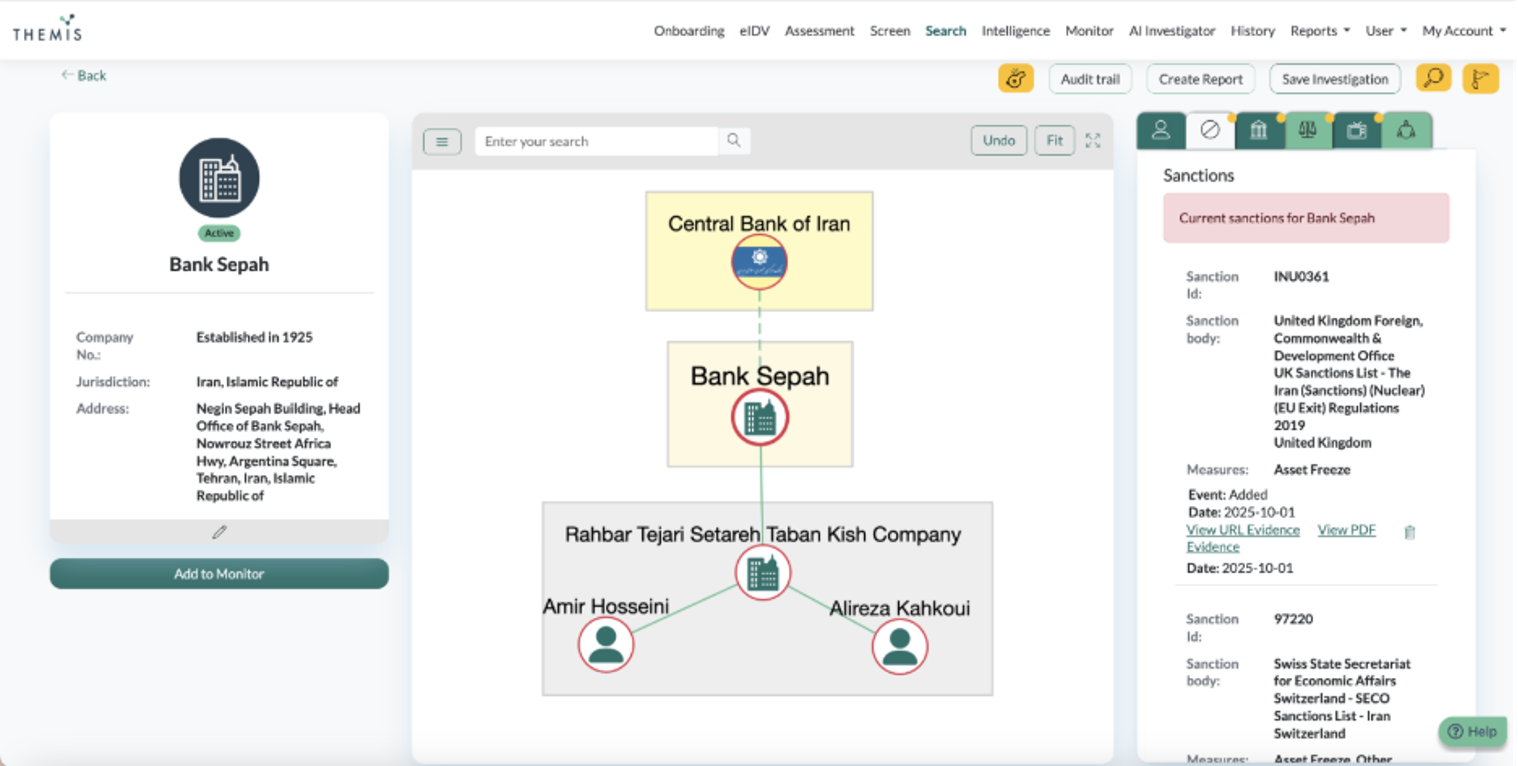
The US Treasury’s Office of Foreign Assets Control (OFAC) has sanctioned 35 individuals and entities linked to Iran’s shadow financial architecture - networks responsible for moving tens of billions of dollars. Central to this system are “Rahbar” companies, which oversee extensive webs of overseas shell entities, enabling payments tied to Iranian trade to pass through the formal financial system while obscuring their origin and purpose.
A key institution is Bank Sepah, long associated with Iran’s ballistic missile programme. Through its Rahbar-linked structures, it has facilitated access to international markets, supporting both oil transactions and procurement activity tied to military programmes.
OFAC has also issued a targeted warning regarding Chinese “teapot” refineries: small, independent operators that collectively process substantial volumes of Iranian crude. Their individual scale may be modest, but their cumulative role in sustaining Iran’s oil exports is significant.
Regulators have made clear that indirect exposure offers little protection. Financial institutions and counterparties are expected to reassess their risk positions, particularly where these refineries intersect with US-origin technology or financial systems. Several entities, alongside associated shipping networks, have already been designated.
Sanctions have further extended to a network linked to Mohammad Hossein Shamkhani. This multi-billion-dollar operation relies on a web of outwardly legitimate firms—consulting, administrative, and shipping entities—that collectively facilitate the movement of sanctioned oil via a “shadow fleet.”
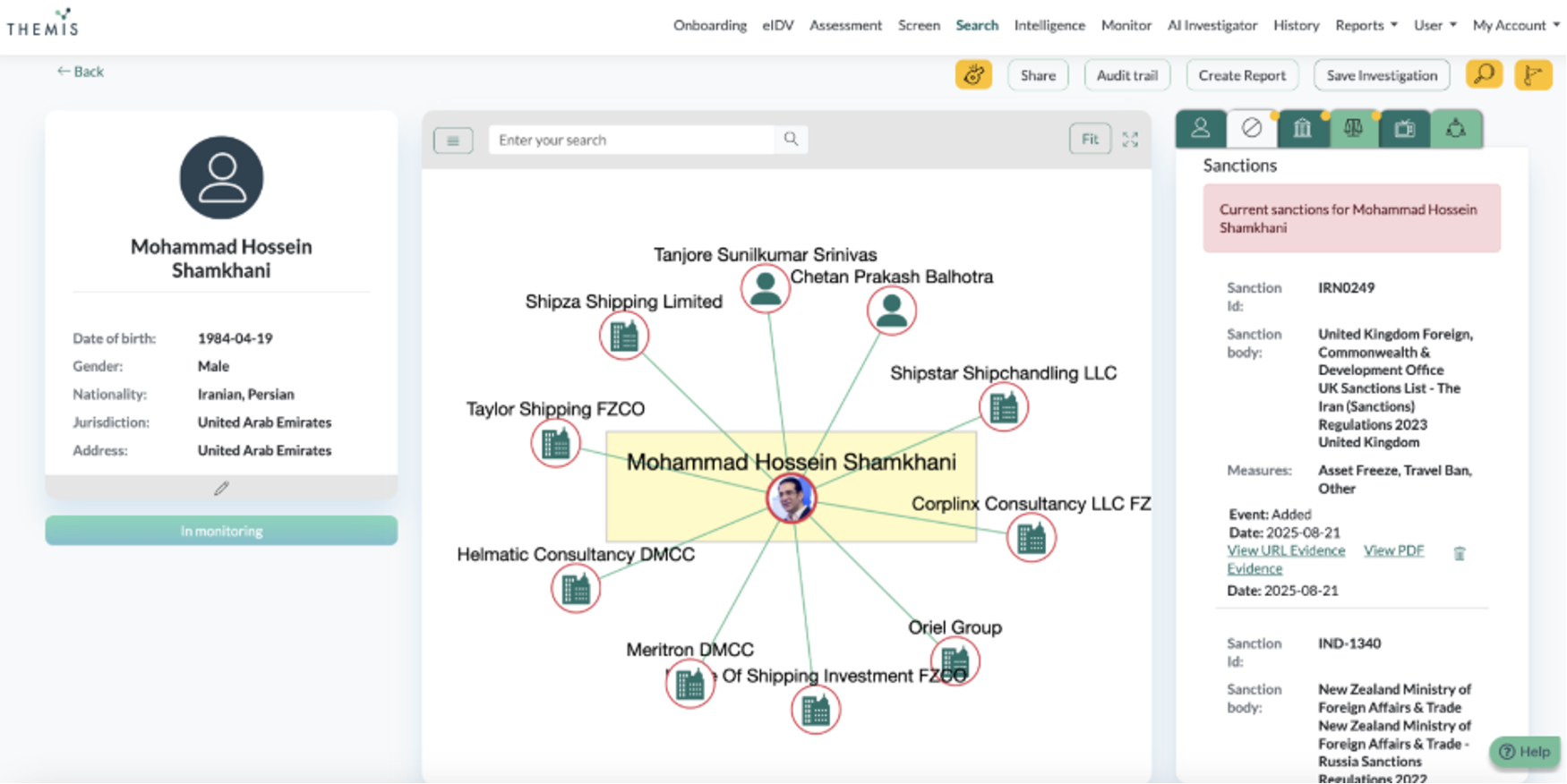
Individually, these businesses present ascredible commercial actors. Taken together, they form an infrastructure designed to sustain large-scale sanctions evasion.
A further round of sanctions targeted 14 individuals and entities involved in sourcing and transporting weapons and dual-use components. These networks operate through layered intermediaries, front companies, and non-Iranian suppliers, creating distance between procurement activity and end use.
Among those designated is Pishgam Electronic Safeh Company, linked to the acquisition of UAV-related components and supported by a network of financial and logistical facilitators.
US authorities have also acted against a Hezbollah-linked financier involved in a multi-jurisdictional oil-for-gold scheme spanning Iran, Venezuela, and Turkey. Iranian oil was exchanged for discounted gold, transported onward, and ultimately sold to generate funds for sanctioned groups.
At the centre of this network is Seyed Naiemaei Badroddin Moosavi, whose operations reflect a broader trend towards multi-asset, multi-jurisdictional sanctions evasion, combining commodities, aviation and financial channels in ways that complicate detection.
The past month offers a fairly clear picture of where enforcement is landing; and that broader dynamic is playing outagainst a geopolitical backdrop that remains far from settled. Recent exchanges in the Strait of Hormuz - following Washington’s launch of “Project Freedom” to escort commercial vessels - underscore how quickly tensions can translate into operational disruption. Iran’s response, involving missile strikes, drones and fast-boat activity, signals a willingness to contest not just military presence, but the flow of global trade itself.
For now, markets appear relatively composed.Movements in the S&P 500 and US Treasury yields suggest that investors are pricing in risk without anticipating immediate escalation. That may prove optimistic. The current trajectory points towards a drawn-out period of friction, rather than a decisive resolution - something that aligns with earlier expectations that the conflict would extend into the summer, with any meaningful de-escalation likely shaped by the US electoral calendar.
In that environment, sanctions are unlikely to plateau. Incremental expansion - another turn of the screw, and then, perhaps, another - remains the more probable course, particularly as regulators continue to probe the networks that sit just beyond immediate visibility.
For businesses operating in the UAE and across MENA, the regional relevance lies in the mechanics of sanctions evasion. Iranian oil does not move through a singlevisible channel. OFAC’s recent warnings point to front companies in Asia and the UAE, intermediary brokers, ship-to-ship transfers, falsified documentation and vessel identity manipulation: all designed to separate the commercial transaction from its origin.
The same logic applies to payments. Recent designations targeting Iran’s shadow banking networks show how oil revenues and other funds are routed through exchange houses, shell companies and overseas facilitators, allowing sanctioned activity to pass through parts of the formal financial system while appearing detached from Iran (this has particular weight in a region structured around cross-border trade, energy flows and financial intermediation).
UAE enforcement cases offer a more localised view of how this presents. Individuals linked to Iran-aligned networks have been identified within roles connected to property transactions, cargo handling and financial services. The positions themselves are unremarkable; their placement within broader transaction flows is what brings them into scope.
For firms, the challenge is that each layer may appear commercially coherent. A vessel movement, a property transaction, a payment instruction or a supplier relationship may withstand initial review. The sanctions nexus may sit further back, distributed across ownership, routing or financing arrangements that only become visible when the transaction is placed within a wider network.


UK private credit litigation is set to rise as the credit cycle turns, echoing US trends in mis-selling claims. Fund managers, GPs and wealth managers should align marketing, due diligence and documentation now to defend against investor claims over disclosures, valuation and fees.

This piece develops the argument from our recent panel on emerging risks in private credit, with former FCA COO Emily Shepperd and Dan Hemming, financial services disputes partner at RPC.

In one set of marketing materials, the UK lender Market Financial Solutions told backers it had issued £45.4 million of loans in 2011. Its filed accounts for that year recorded £196. The gap sat in the public record, there for anyone who looked.




Lorem ipsum dolor sit amet, consectetur adipiscing elit, sed do eiusmod tempor incididunt ut labore et dolore magna aliqua. Ut enim ad minim veniam, quis nostrud exercitation ullamco laboris nisi ut aliquip ex ea commodo consequat. Duis aute irure dolor in reprehenderit in voluptate velit esse cillum dolore eu fugiat nulla pariatur.
Block quote
Ordered list
Unordered list
Bold text
Emphasis
Superscript
Subscript