

Platform

Resources












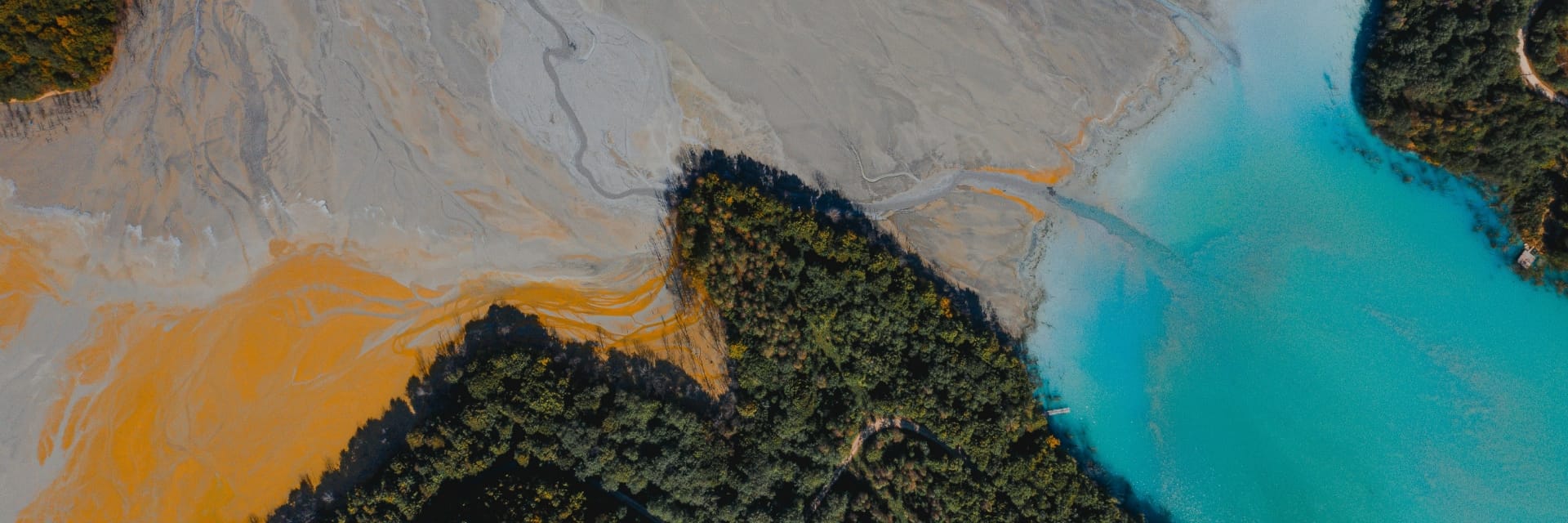


Environmental crime has become one of the rapidly expanding transnational threats, with annual illicit profits reaching up to $281 billion, according to the Financial Action Task Force (FATF). Recognised as the world’s fourth-largest crime after drug trafficking, counterfeit crimes and human trafficking, environmental crime continues to pose challenges for financial institutions regarding their role in preventing, identifying and mitigating associated financial risks.
To strengthen the financial sector’s response, the World Wide Fund for Nature (WWF) and financial crime risk management platform Themis launched in 2024 the Environmental Crimes Financial Toolkit, an online platform desiged to help financial institutions integrate environmental crime risks into their anti-money laundering and risk assessment frameworks.
Financial Crime Digest spoke to John Dodsworth, Head of Deforestation Strategy at WWF UK, about how, almost two years since its launch, the Toolkit has been used by financial institutions to respond to environmental crime risks, the growing importance of including land conversion within financial crime frameworks, and how emerging threats will define the fight against environmental crime over the next decade.
Over the past years, environmental crime has received growing attention in reports and policy discussions, and tools like the Environmental Crimes Financial Toolkit have also been developed to support financial institutions in strengthening their approach. Considering this, do you think financial institutions are now better equipped to assess and mitigate environmental crime risks in practice? Has their approach to tackling environmental crime evolved in recent years or is there still a tendency to view environmental crime through a sustainability lens?
I think there are two things to flag here. First, I think that there has been growing attention and I would say the Financial Action Task Force reports from 2020 and 2021 on the illegal wildlife trade and environmental crime were incredibly useful. Under the presidency of Marcus Pleyer at the time, it was the first time that a clear connection was being made to money laundering, wildlife crime and more broadly to environmental crime. And it was incredibly useful for raising the profile and also showing what WWF and other organisations have seen for a longer time – the convergence and interconnectedness of environmental crime with other crime types.
But while there is a growing awareness, what I would say is, particularly over the last decade, environmental crime has increased. The published data is now out of date, unfortunately, but the United Nations Development Programme and Interpol estimate that environmental crime is growing at two to three times the rate of the legal economy. And with that in mind, what I would argue is, while there is a growing awareness, the speed and scale of the growth of environmental crime is outstripping that awareness. Therefore, there is a disconnect and gap between regulatory guidance and prioritisation of environmental crime, and that has a knock-on effect in terms of how financial institutions can prioritise these issues and operationalise these growing emerging threats.
Almost two years after the Toolkit's launch, what conclusions can be drawn about its impact on how financial institutions incorporate environmental crime considerations into their risk frameworks?
Over the last two years, we've had really constructive technical workshops and one-to-one sessions with financial institutions. The feedback from financial institutions is that the usability, the data and the functions that are within the Toolkit are incredibly valuable. In different settings, financial institutions have used the red flags and typologies to screen existing clients. We know of one financial institution that has used the data to benchmark an emerging policy on deforestation.
In other cases, they've actively and constructively supported us with recommendations on where to go next. An emerging function of the Toolkit, being a supply chain risk filter, has only come about due to discussions with financial institutions on the topic of trade-based finance and its connection with value chains. And that would not have been possible without that overlay of understanding what supply chains look like – whether that be soy, beef or palm oil – and understanding of the complexity of value chains and how financial institutions finance particular clients.
If we consider the Toolkit as an outward facing product, what sits behind it is the actual engagement with FIs directly through these working groups and workshops to be able to actually gauge what are the remaining sort of blocks or gaps, and us utilising that to really build out a Toolkit that has a relevance to financial institutions in addressing environmental crime.
The Toolkit places emphasis on land conversion, which is often discussed in sustainability terms, but less often framed as a financial crime risk. How should financial institutions understand the relationship between land conversion and other forms of environmental crime, like illegal logging or deforestation? Is land conversion seen as a standalone offence or more like the consequence of other environmental crimes?
The process of large-scale land acquisition can be both illegal and illicit and we should differentiate what we mean here. So by illegal, it can be clearly breaking national laws and that would immediately be seen as an offence which a financial institution would have to address. But if we're talking about illicit large-scale land acquisition, and by that we mean company A buying land from company B, that will need financing by a financial institution. Here the illicit component comes to the fore, meaning that while it is legally not a problem to purchase the land, the illicit nature of it through bribery and corruption, fraud and wider connections to organised crime really come into play.
Not dissimilar to our work on illicit and illegal mining, but differentiation needs to be made for a large-scale land acquisition because, from a financial perspective, if it's illegal land acquisition, they would already be screening for this through different filters and through regular engagement. But if it's illicit, that's where ultimately that intersection with wider environmental crime really needs more attention. And actually, it's one of the things that we've worked quite hard on, particularly when we look at the country risk assessment, is being able to show where there are those convergences more broadly of environmental crime and predicate offences and the whole array of financial crimes. That's where that large-scale land acquisition and conversion piece comes really into its own. So it's not as well understood. And yet, large-scale land acquisition is one of the key drivers of deforestation and land conversion, and we know financial institutions do have a significant exposure to that.
You mentioned there's a strong link between land conversion and other types of financial crime – money laundering, fraud, tax evasion, corruption. Do you think that financial institutions are fully capturing the exposure to financial crime risk linked to land conversion or do they tend to approach land conversion primarily as an ESG issue?
On that point, where existing AML frameworks will take a sectoral approach, understanding what underpins particular sectors becomes really important. When we look at the sort of agribusiness or sort of more broadly the agriculture sector, where large-scale land acquisition sort of underpins this. Whether a financial institution has sight of that component of their risk relating to the agriculture sector, let's say, there's a question mark there, just in part because ultimately understanding the complexity of these value chains is in itself still a sort of quite a nascent subject. I think that, while there will be overarching typologies and red flags for sectors, for large-scale land acquisition in particular, I would say it remains a gap.
Besides understanding the complexity of supply chains, what other barriers are preventing financial institutions from more systematically integrating land conversion into their risk assessments?
In part, it also comes down to also the regulatory prioritisation. One of the things that we know when we look at national risk assessments, where they reference environmental crime, they often reference deforestation or the illegal wildlife trade. And often the follow-up response is more information is needed, more resources are needed to actually better understand the issue, even at that national level. To me, one of these additional gaps is ultimately the regulatory guidance for financial institutions, because we know there are competing priorities from an AML, due diligence perspective, whether that's human trafficking or terrorist financing. But given environmental crime is the fourth largest crime type by value, it shows that there is a disconnect between the regulatory prioritisation of this crime type and the size and scale of the challenge. I think that is one of the biggest blind spots at the moment.
From that perspective, I think there is a growing awareness, but one of the things that often happens is environmental crime is not being viewed in itself as a risk. So there may well be a corruption risk that's been identified, there might be a fraud risk that's been identified, but currently people are not looking for that connection to environmental crime. In reality, that's one of the pieces where the regulatory guidance can really support financial institutions, one, from a prioritisation perspective, and two, with some of that insight and knowledge that will then help them be able to address it within their own due diligence and KYC protocols.
Could you share some specific legal, financial and reputational red flags that signal financial institutions may be indirectly financing or enabling activities that drive illegal land clearing?
Many of the red flags I'll mention would be commonplace with other types of AML risk, but I think the use of shell companies and beneficial ownership, often hiding politically exposed persons is one red flag. A second red flag often revolves around the date of creation of particular companies, which are moving large sums of money, yet have no previous track record of working in sectors. The third is a company that is operating in several high-risk sectors – forestry and maybe one or two commodity sectors can often raise a red flag that ultimately they're utilising multiple different value chains to move funds.
On top of that, one of the clearest red flags would be actually where you look at trade data between country A and country B, where one company operates, and seeing serious discrepancies between commodity flows. With our illicit mining report, one of the most interesting insights is where you're seeing large volumes of a particular mineral moving from country A to country B, yet publicly country A is disclosing that minimal amounts of that mineral is moving to country B, which shows again, this sort of underscoring, this sort of convergence between legal and illegal routes.
These typologies and red flags are evolving as the criminal networks evolve, and as these value chains evolve. One of the reasons why environmental crime is increasing in value and particularly scale is because of the fungibility of what we're talking about. One commodity can be swapped out for another depending on market value. And a really good example of that in the last five years has been the increasing value of gold has seen a parallel direct increase with the proportion of illegal mining. The fungibility of the commodities being traded and their need and requirement within the global economy means that actually these typologies and red flags will continue to evolve.
In practice, are financial institutions more frequently exposed to illegal land conversion through commodity supply chains like timber, soy, palm oil, cattle, minerals, rather than through direct financing of land development projects?
I think it would really depend on the financial institution. One of the things that we've done within our work is develop a filter of where a financial institution has direct risk or where they may directly have clients in a particular sector increasing exposure to indirect risk. It might well be that they are supporting companies that are providing the machinery or the logistics support for a sector where there might be risk.
The third is more tertiary risk or what we'd call correspondent banking risk. One of the things from a WWF perspective is that you're often initially met with a financial institution turning around and saying "Oh, well, we're not in these sectors. We're a retail bank in X jurisdiction. This isn't a risk for us." But then when you look at correspondent banking risk, there's actually a genuine risk. In part because in many of the cases where we're talking about environmental crime, whether it be illegal land conversion that's happening in region A, Bank A has a correspondent banking relationship with Bank B in the UK and suddenly actually there is an environmental crime risk, because UK Bank B has a requirement to understand and better know what Bank A is doing. From an environmental crime perspective, that remains a gap and is a space where, from a regulatory perspective and a prioritisation perspective, for financial institutions to support correspondent bank training is really vital - in part because better understanding what those correspondent banks are doing and the sectors they're involved in will actually help safeguard risks and controls from Bank B's perspective.
There's growing discussion about the use of cryptocurrencies by criminal organisations involved in environmental crime, particularly when we're talking about illegal wildlife trade, to facilitate payments and launder profits. From you research, how significant is this in practice?
If I start with the crypto piece, what I would say outright is it's emerging as a threat, but I think if you speak to FIs or FIUs, they would already say they're coming across this.
I think the challenge that cryptocurrencies immediately pose is the fungibility of environmental crime and the movement of commodity A and commodity B. Cryptocurrency suddenly helps facilitate that trade in a more opaque way. Within that, I think there are particular red flags and typologies around crypto, that can help support or identify, when we're talking about the movement of large sums, the inception or creation of particular companies, and also better understand the value chain or the connection to either high-risk sectors or politically exposed persons.
I think there is potentially a regulatory guidance piece, because within crypto, we know already there's the use of Tether, stablecoins that are tied to the US dollar, that are being used in lieu of payment for metals transactions. From a banking perspective, I think one of the key pieces here is that financial institutions are part of the solution to this, but they cannot do it on their own.
Part of this is the importance of public sector private partnerships and information exchanges, because what you need to be able to do is to be able to have spaces at a national level or a regional level where information exchanges between crypto exchanges and financial institutions and law enforcement can take place. Because fundamentally, if a crypto exchange has flagged a high-risk account, a particular name, a particular address and set up, in an ideal world, you'd want that name, address and red flag to be shared with financial institutions so that they can also check. That's happening sporadically, in part because public sector private partnerships are hard to set up. The emerging threat of something like cryptocurrency points towards the importance of increasing public sector private partnerships to address this risk.
Where else do you see the most structural deficiencies that continue to enable environmental crime and what still needs to be addressed to close these gaps?
I think we've seen progress over this last decade. I think FATF's briefings and recommendations papers were incredibly useful. A FATF paper that looks particularly specifically at illegal gold would be helpful given the visibility at the moment of illegal gold as undermining financial integrity.
But more broadly in terms of what else needs to shift, one of the FATF recommendations that was in the paper in 2021 on environmental crime was around international cooperation. And absolutely crucial to this is when we're talking about environmental crime, we're talking not just about a national issue or a regional issue, but we're talking about a global issue because these value chains are global. So international cooperation becomes even more important. The ability to have wider cooperation and, ideally, the creation of cross-country working groups specific to environmental crime, would be a really positive step. At the moment, around that sort of prioritisation or hierarchy of needs, environmental crime is sitting fairly low down that pecking order. I think the ability to actually operationalise that FATF recommendation on international cooperation, as well as further guidance from FATF specific to illicit gold would be a good start, but obviously that's only a start.
How do you see environmental crime evolving in the next decade? What would you say are the biggest emerging threats in terms of how environmental crime is carried out and how money flows?
Some of these emerging threats are already here.
If we look at the moment as to the effectiveness of sanctions, we already know that sanctions are being evaded with the movement of illicit gold and illicit timber. There are cases of that happening, particularly over the last five years. Sanctions evasion and the integrity of sanctions regimes are genuinely a threat because of environmental crime and that will remain a challenge for jurisdictions. Greater prioritisation and operationalising key agencies to be able to address this, as well as the support from financial institutions will be paramount.
In terms of other threats, environmental crime continues to grow. It is not slowing down and in part that is because of global demand for minerals and metals and for other resources continues. It's not slowing down at all. Within that convergence piece related to environmental crime, it remains as a crime type of high-reward, low-cost: the gains to be made are significant and the cost of criminal conviction, the penalties still remain small in comparison to the profits that are to be made. So the prediction that environmental crime will continue to rise will hold true.
The convergence with other crime types will only increase, whether that be avocado supply chains being connected to drug trafficking, whether that be illegal wildlife trade being connected to armed groups, and more recently, to environmental crime being linked directly to groups that are evading sanctions regimes both in the EU and North America.
I think we will see that convergence between different crime types only increase because the profitability of these sectors will increase with global demand for said commodities. I think it points towards the importance of environmental crime being seen as a serious threat and no longer as an ESG issue.
Financial institutions are part of the solution to this, but they are not the only group that needs to be able to come to the table, because ultimately this is an issue for the sector as a whole, as opposed to just a financial institution due diligence issue.




Lorem ipsum dolor sit amet, consectetur adipiscing elit, sed do eiusmod tempor incididunt ut labore et dolore magna aliqua. Ut enim ad minim veniam, quis nostrud exercitation ullamco laboris nisi ut aliquip ex ea commodo consequat. Duis aute irure dolor in reprehenderit in voluptate velit esse cillum dolore eu fugiat nulla pariatur.
Block quote
Ordered list
Unordered list
Bold text
Emphasis
Superscript
Subscript
Lorem ipsum dolor sit amet, consectetur adipiscing elit. Suspendisse varius enim in eros elementum tristique. Duis cursus, mi quis viverra ornare, eros dolor interdum nulla, ut commodo diam libero vitae erat. Aenean faucibus nibh et justo cursus id rutrum lorem imperdiet. Nunc ut sem vitae risus tristique posuere.