Platform

Resources

On 30th September, a very different kind of threat surfaced at 34,000 feet. On flydubai flight FZ1073 from Dubai to Tel Aviv, the co-pilot attacked the captain with the cockpit’s crash axe and tried to take control of the aircraft. The Boeing 737 lost more than 14,000 feet in under 30 seconds before passengers forced their way in and overpowered him. Three days later, the UAE’s Attorney-General confirmed it had been an attempted act of terrorism.
The attacker was not a passenger who slipped past airport security. He was a licensed professional in one of the most closely vetted roles there is, on the inside of every control designed to stop this kind of attack. If the reporting is accurate, the warning signs were there: concerns about extremism at a previous employer, and an online footprint that openly referenced al-Qaeda. This briefing sets out what is known, what is still only reported, and what the case means for how organisations vet and monitor the people they trust.
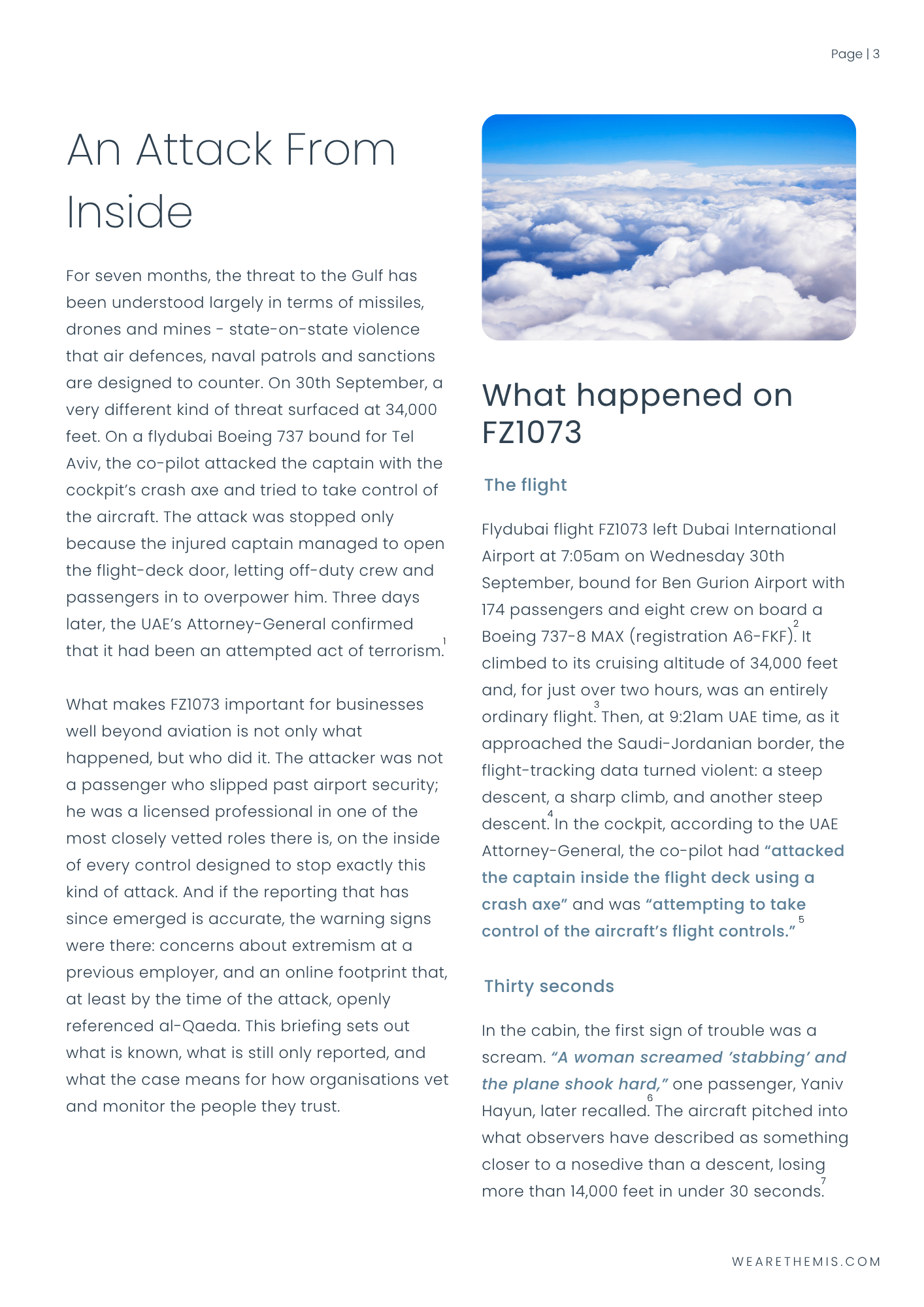
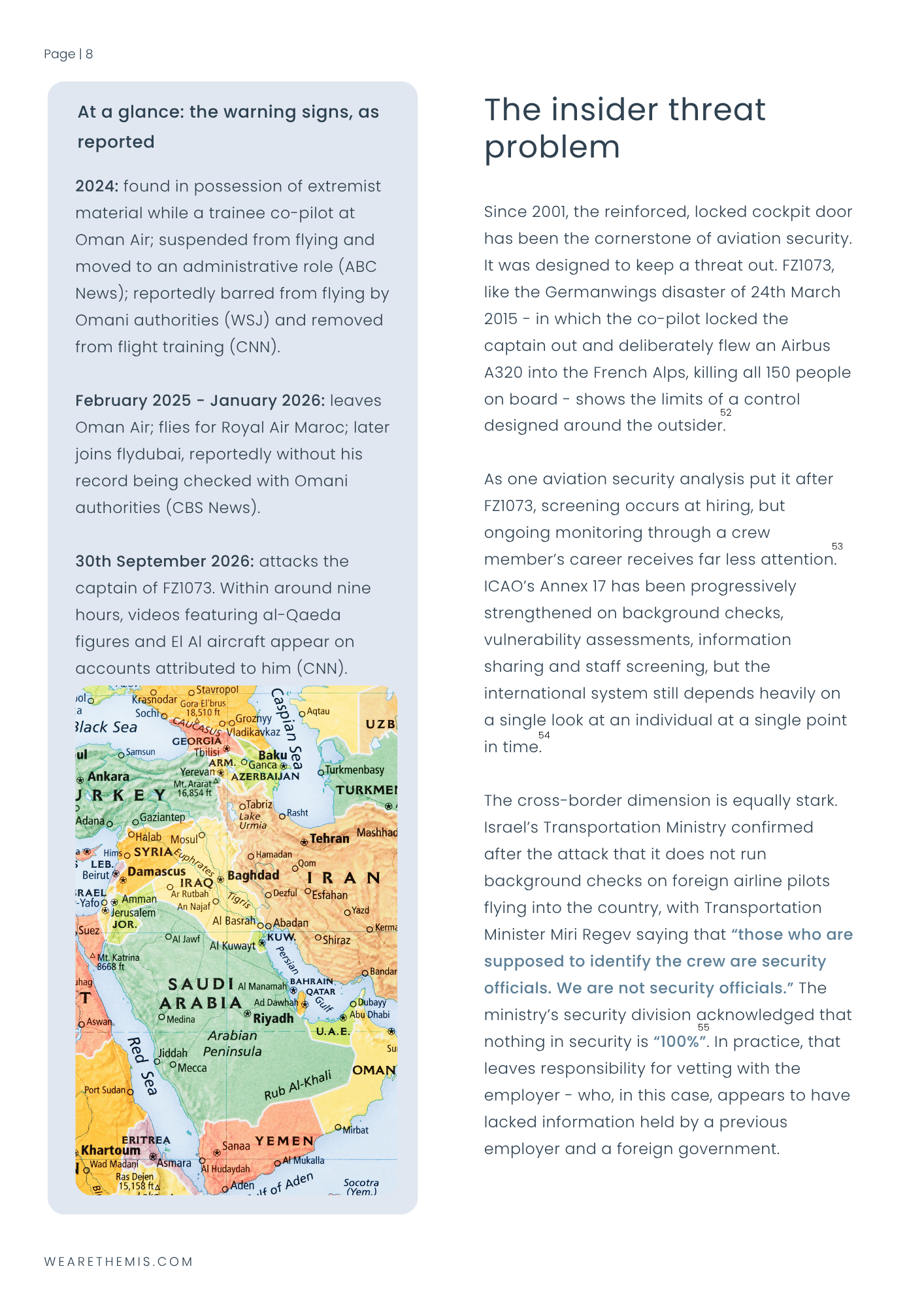
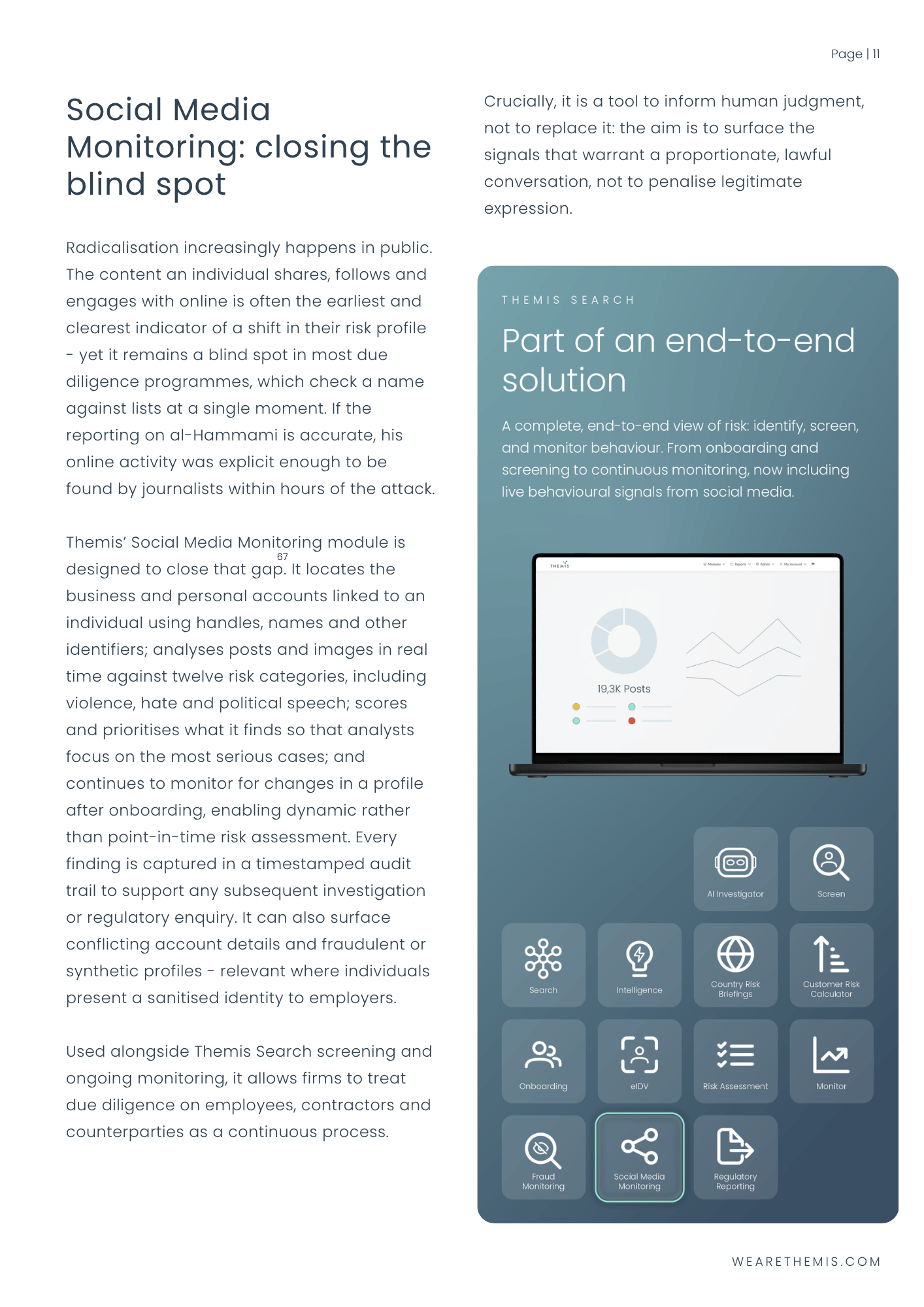
Gain valuable insights with our latest publication. Get your copy now to explore key findings, expert analysis and practical recommendations for managing insider and people risk.







Lorem ipsum dolor sit amet, consectetur adipiscing elit, sed do eiusmod tempor incididunt ut labore et dolore magna aliqua. Ut enim ad minim veniam, quis nostrud exercitation ullamco laboris nisi ut aliquip ex ea commodo consequat. Duis aute irure dolor in reprehenderit in voluptate velit esse cillum dolore eu fugiat nulla pariatur.
Block quote
Ordered list
Unordered list
Bold text
Emphasis
Superscript
Subscript