Inside the Latest Financial Siege on Iran

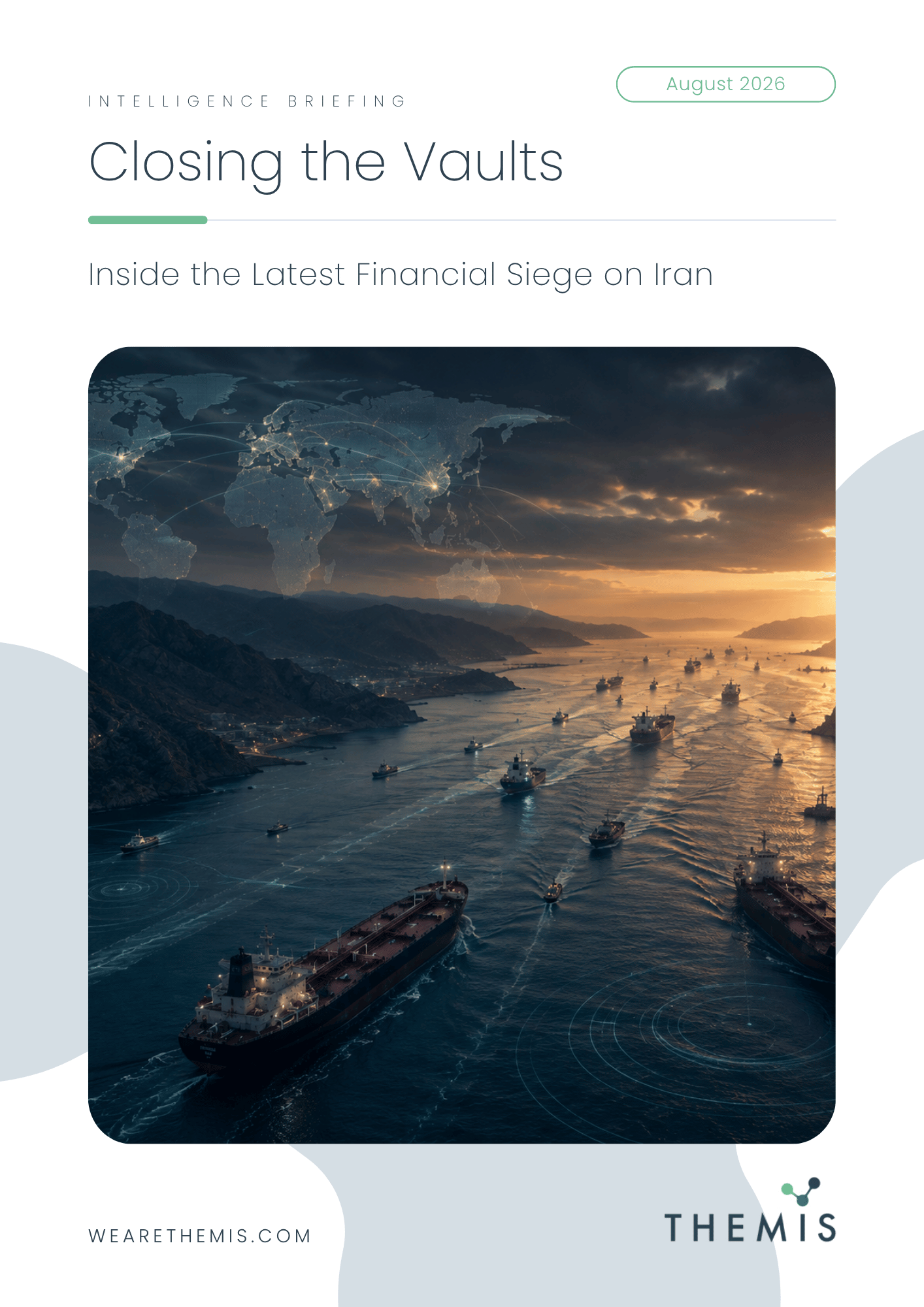
Closing the Vaults

Conflict Advisory

Closing the Vaults

Six mechanisms named, one warning aimed at every country still trading with Iran

Hours after Iranian missiles struck Emirati territory on 19th August, President Trump branded a new sanctions push "ECONOMIC D-DAY" and named six mechanisms for closure — oil smuggling, swap lines, cash transfers, exchange houses, ship registries and front companies. Then he extended the threat past Iran's own borders: any country whose institutions provide Tehran a lifeline would itself face "TREMENDOUS economic consequences." This briefing traces where the IRGC's money actually sits — from a command structure now wiped out twice in a year, through a $95 billion parastatal wealth machine, down to the captive banks, front companies and port operators that let a clean-looking counterparty appear to have never touched Iran at all.
What's inside

  • The "Economic D-Day" declaration — Trump's 19th August statement, the six named mechanisms for closure, and why the "any country" line is a secondary-sanctions warning aimed at facilitating jurisdictions as much as Iran itself
  • A command structure wiped out twice — how the IRGC lost its senior wartime leadership in the June 2025 "Twelve-Day War" and again in strikes through early 2026, who commands it now under Supreme Leader Mojtaba Khamenei and Commander-in-Chief Ahmad Vahidi, and the unresolved discrepancy over whether Quds Force commander Esmail Qaani is alive
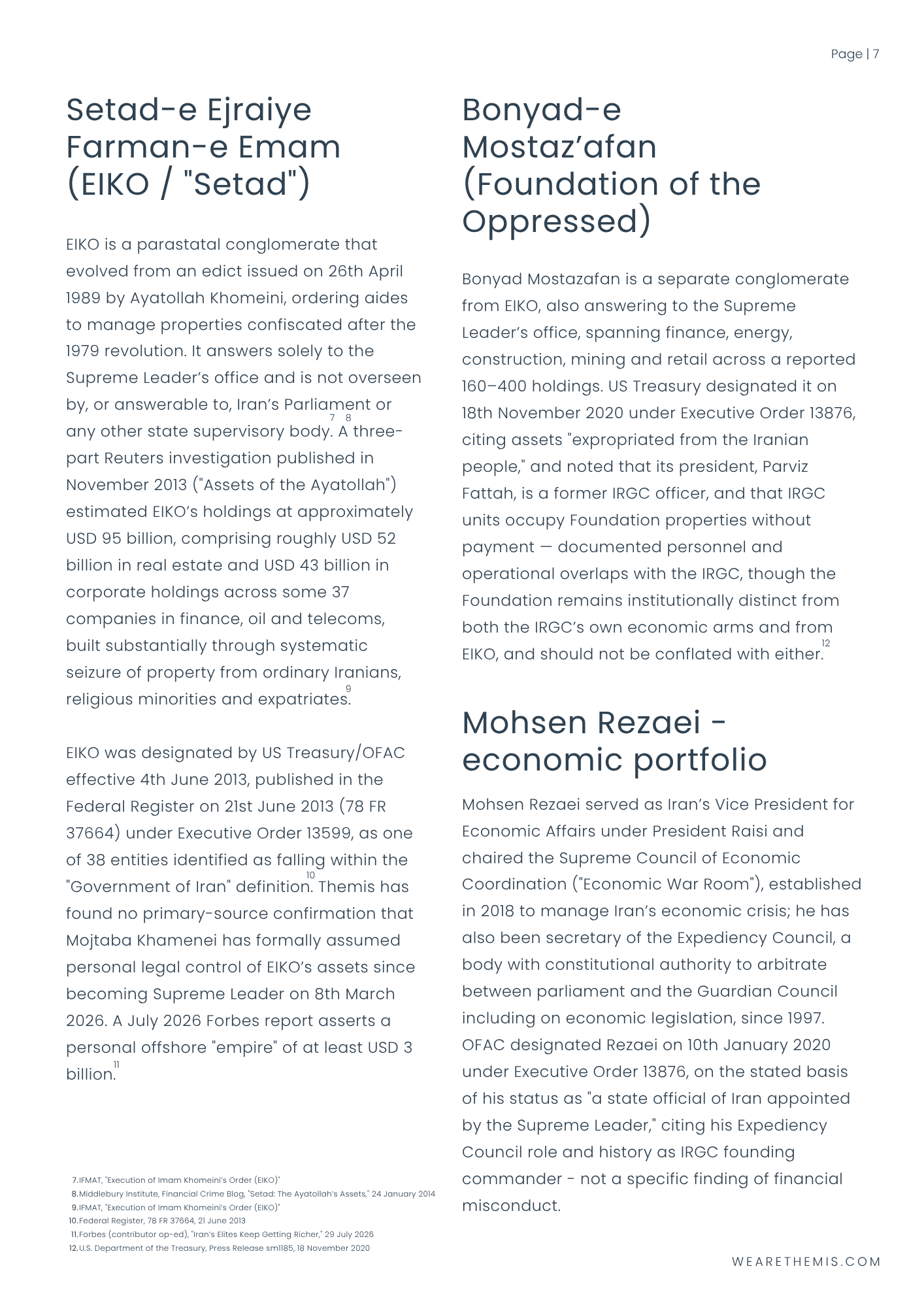
  • The IRGC's parastatal wealth machine — inside Setad-e Ejraiye Farman-e Emam (EIKO), Bonyad Mostaz'afan, Khatam al-Anbiya Construction Headquarters and Bonyad Taavon Sepah, entities holding an estimated $95 billion-plus in assets and governed by the IRGC's own officer corps rather than shareholders
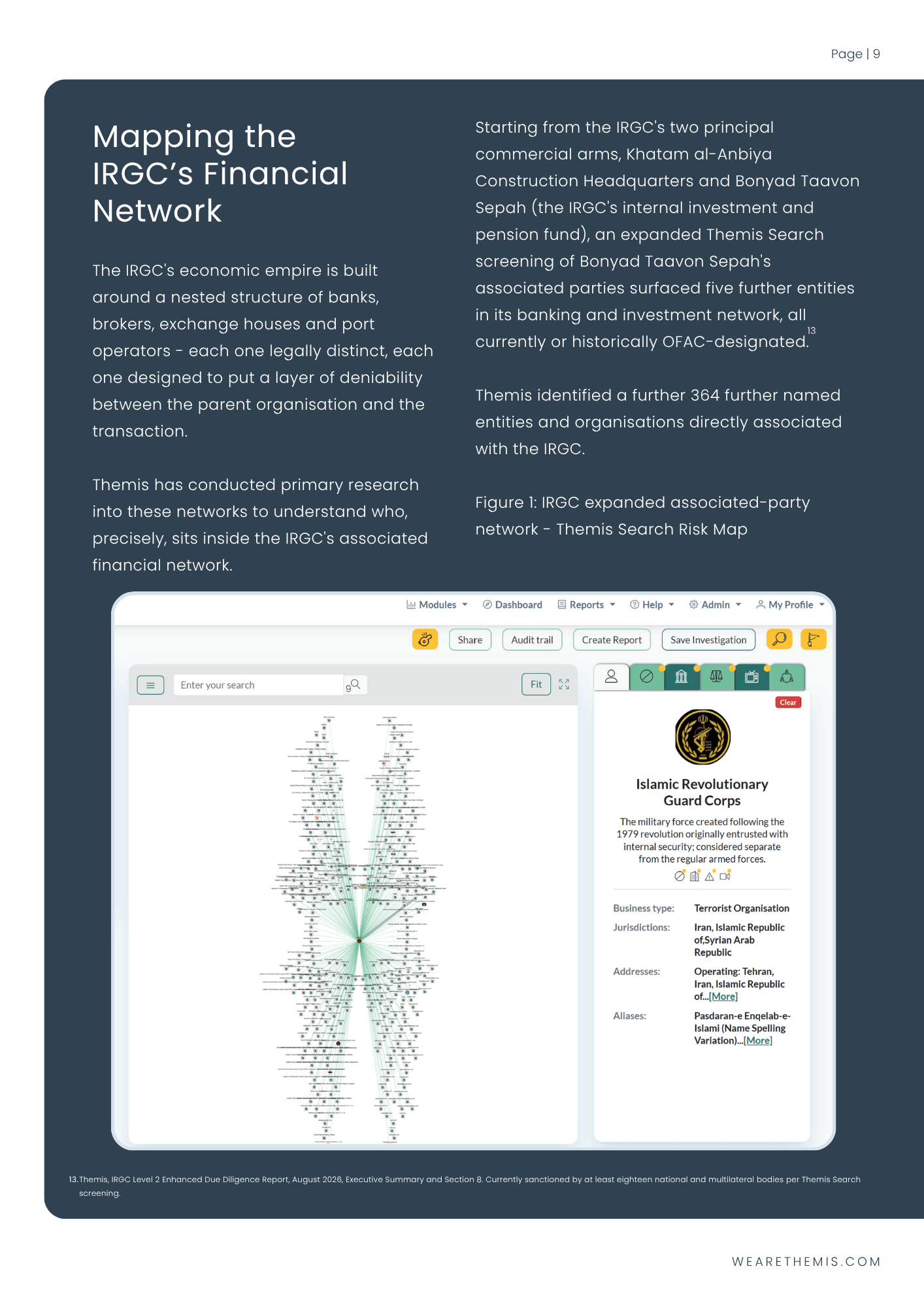
  • Mapping the financial network — Themis's expanded screening of Bonyad Taavon Sepah's associated parties, surfacing a captive banking layer (Ansar Bank, Mehr Bank), a documented front-company layer reaching into Dubai-registered general traders, and Tidewater Middle East Co.'s control of roughly 90% of Iran's container traffic through Bandar Abbas
  • Secondary sanctions exposure by corridor — trade-data analysis of the UAE, China, Türkiye, Iraq and India's exposure under the "any country" warning, and how the UAE, Saudi Arabia and the Terrorist Financing Targeting Center are already moving against sarraf exchange-house networks
  • A best-practice framework for firms — a checklist mapped directly to the threats in this report, from risk assessment and policies through systems, training, governance and reporting, to test whether your controls could identify the IRGC entity behind a counterparty that looks entirely local

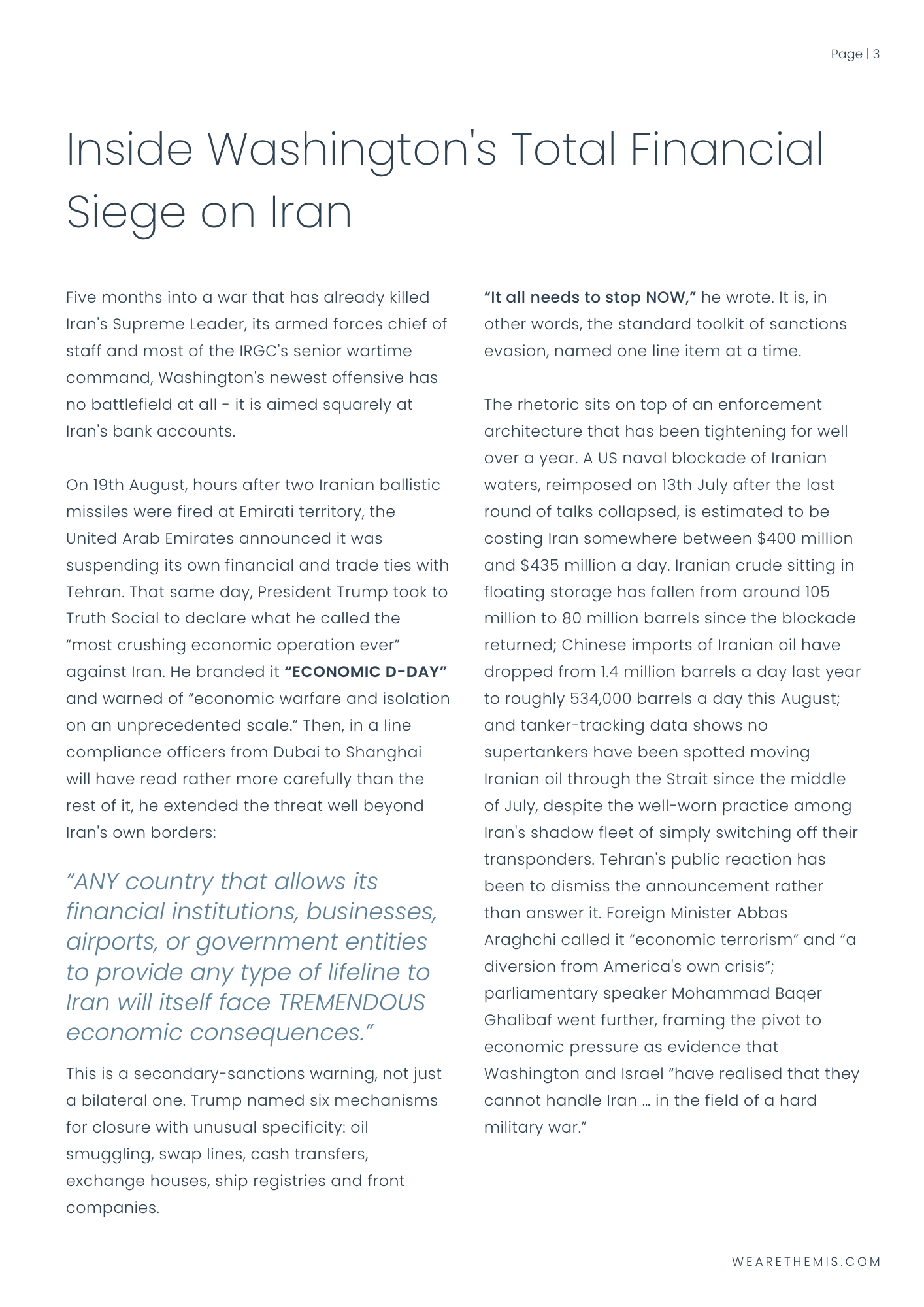
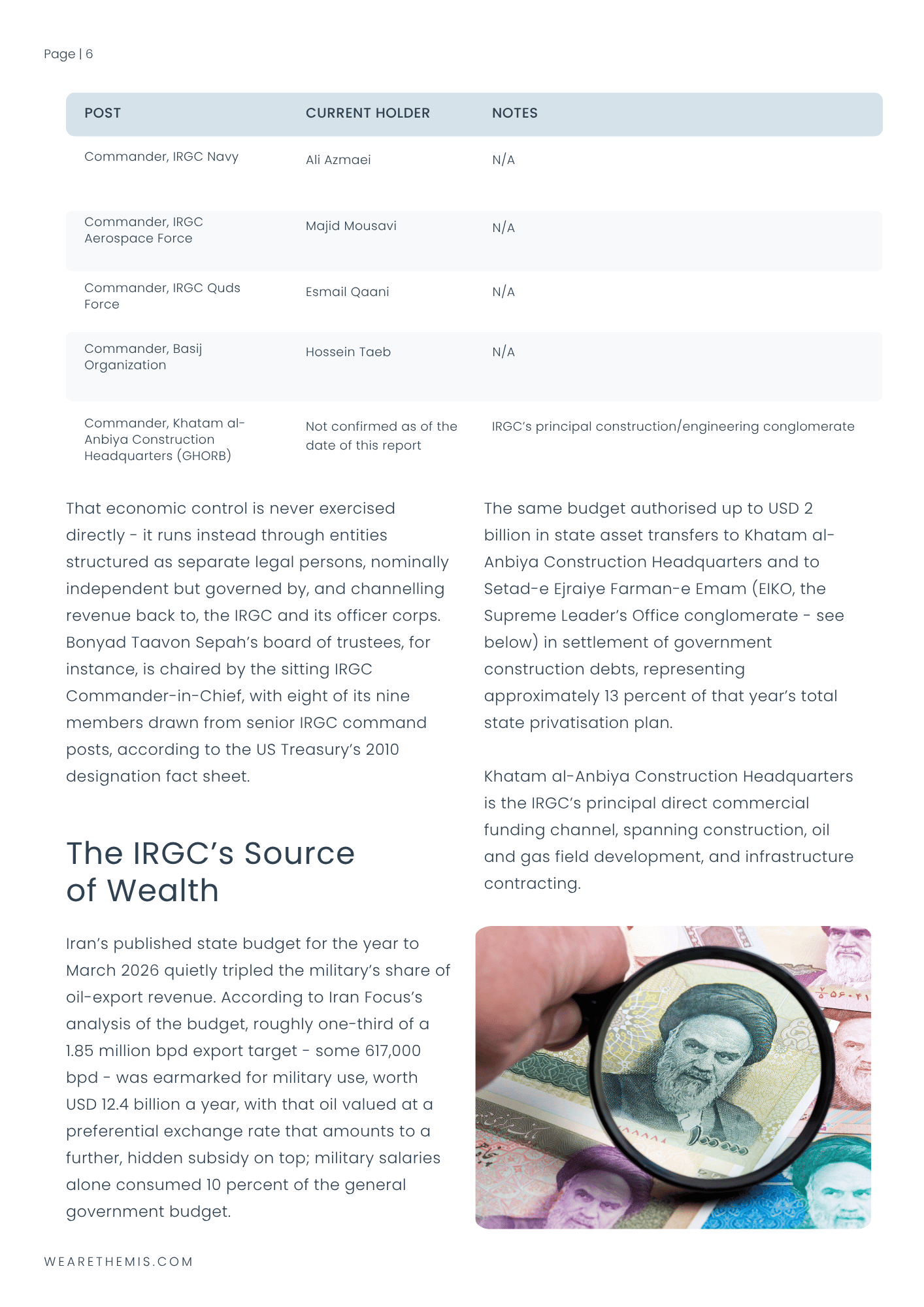
Sample Pages

No items found.
No items found.

Gain valuable insights with our latest publication. Get your copy now to explore key findings, expert analysis, and practical recommendations that help you stay informed and ahead of the curve.
Similar Publications