

Platform

Resources
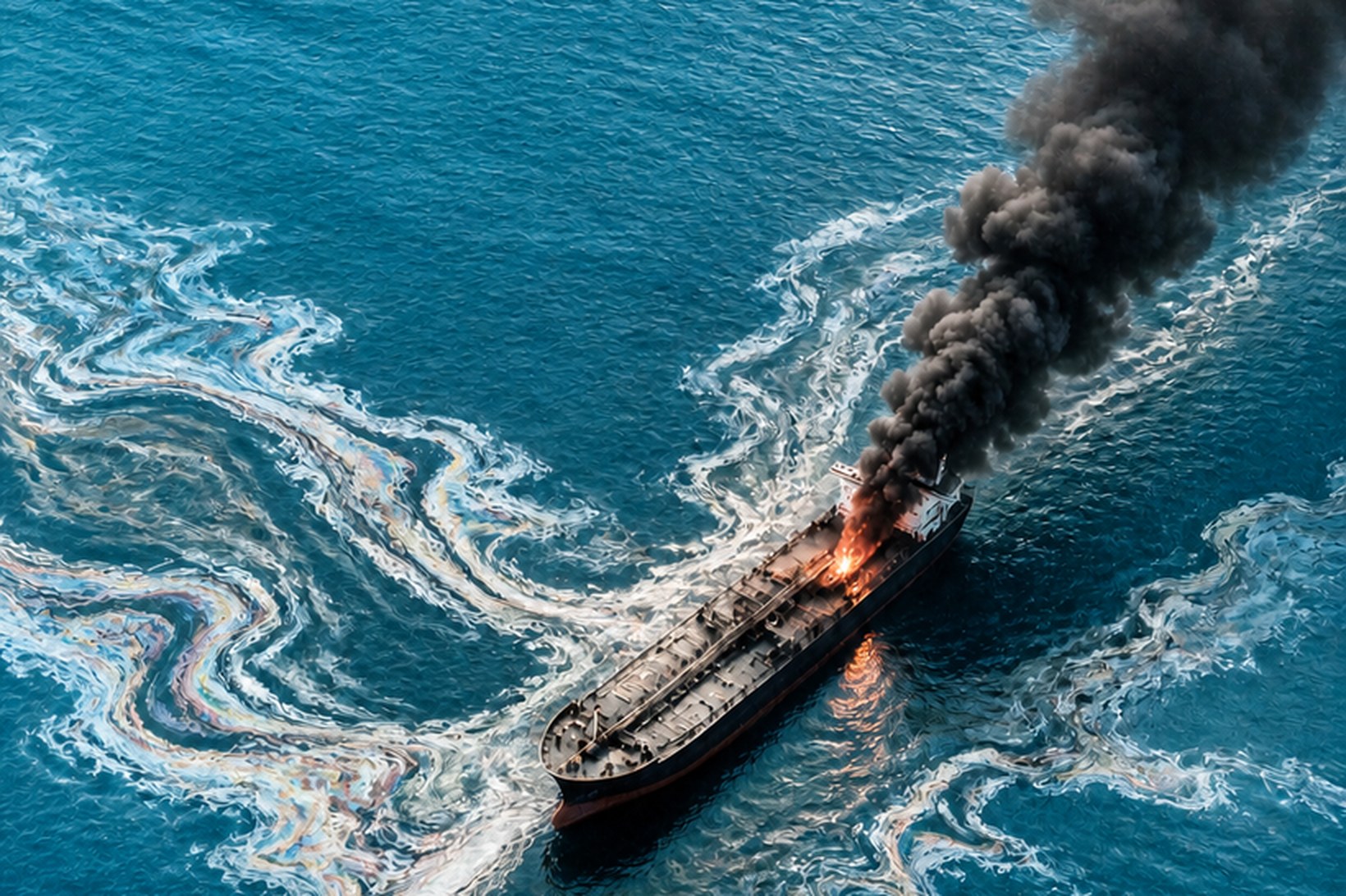
On 14th October, the container ship GFS Pride sank in the Strait of Hormuz, a day after being struck by what Iran’s IRGC Navy said was a naval mine. Within days, social media was awash with footage of iPhones and luxury perfume bobbing in the water off Oman. Fact-checkers found several of the most widely shared clips to be AI-generated. What was real was far less photogenic: drifting containers that Oman’s Maritime Security Centre warned fishermen not to approach, as they may contain hazardous materials. In the first ten days of the war alone, more than 300 incidents with an environmental dimension were recorded, from tanker strikes to burning refineries and punctured fuel depots.
Most commentary on this conflict has focused on markets, sanctions and casualties. Its environmental fallout has gone largely unquantified, yet it sits as squarely on a financial crime radar as an ESG one. This briefing examines four key risk areas: marine pollution, shipping emissions, toxic contamination on land, and the sanctions evasion, fraud and resource exploitation that carry an environmental cost of their own.
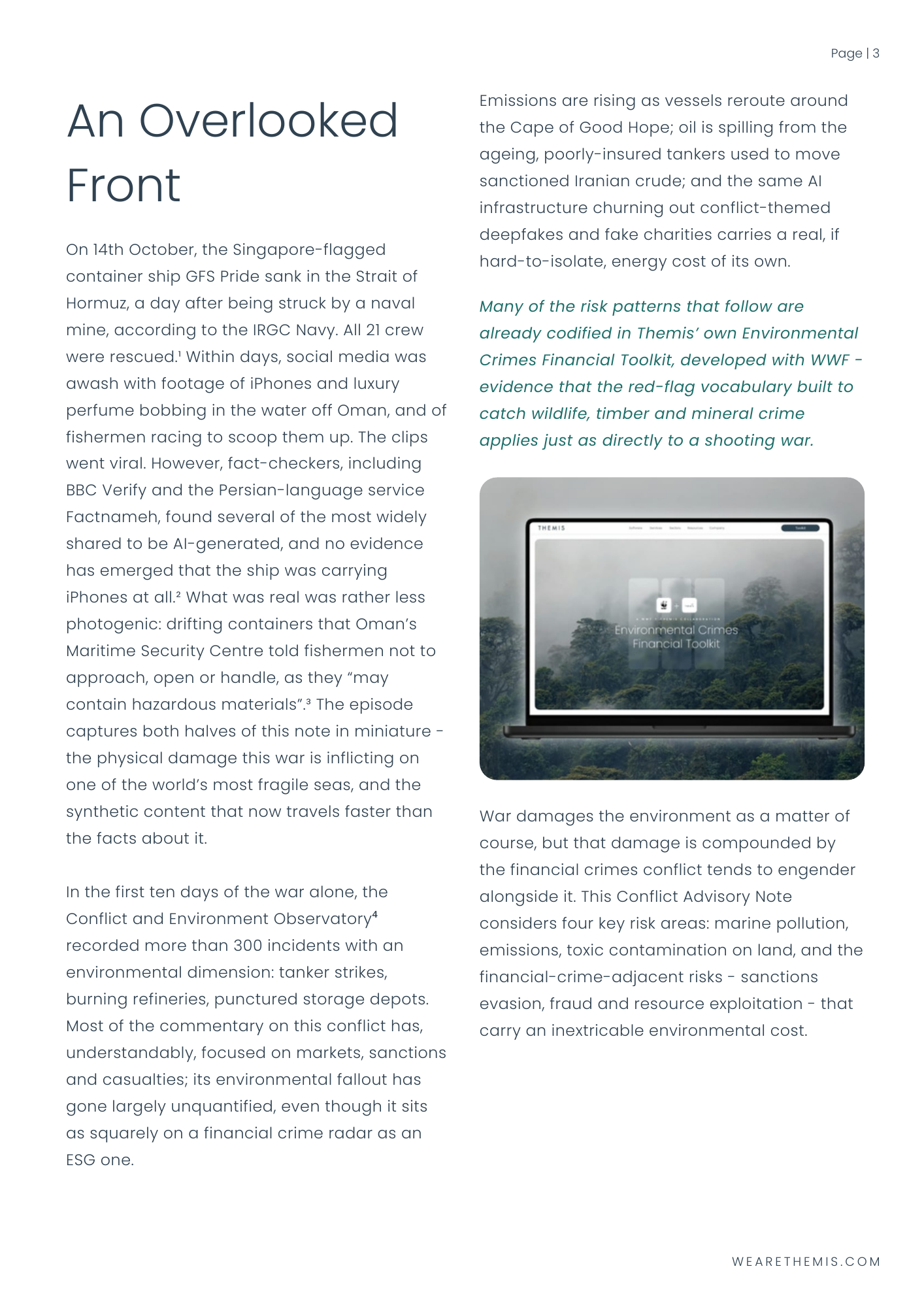

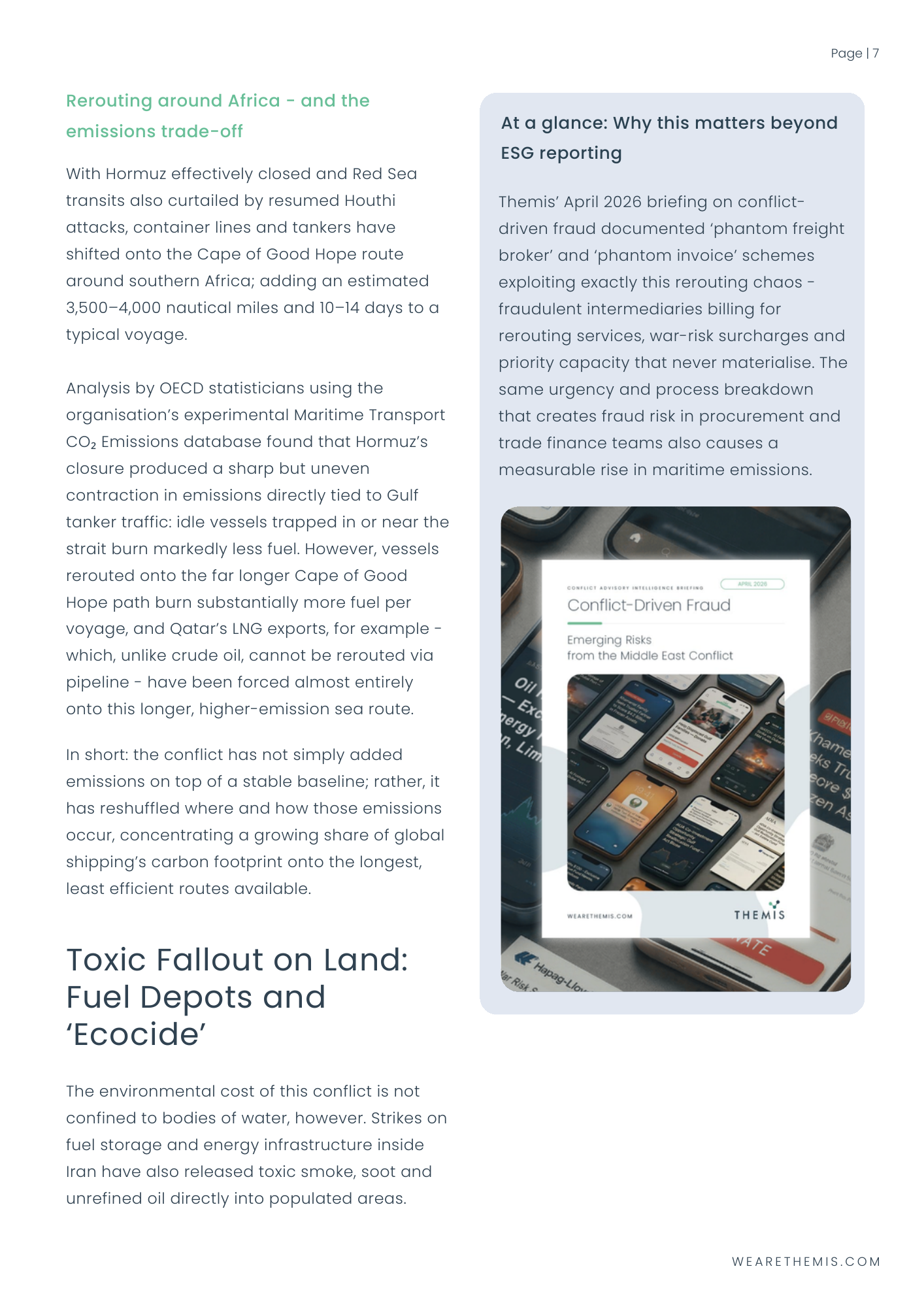

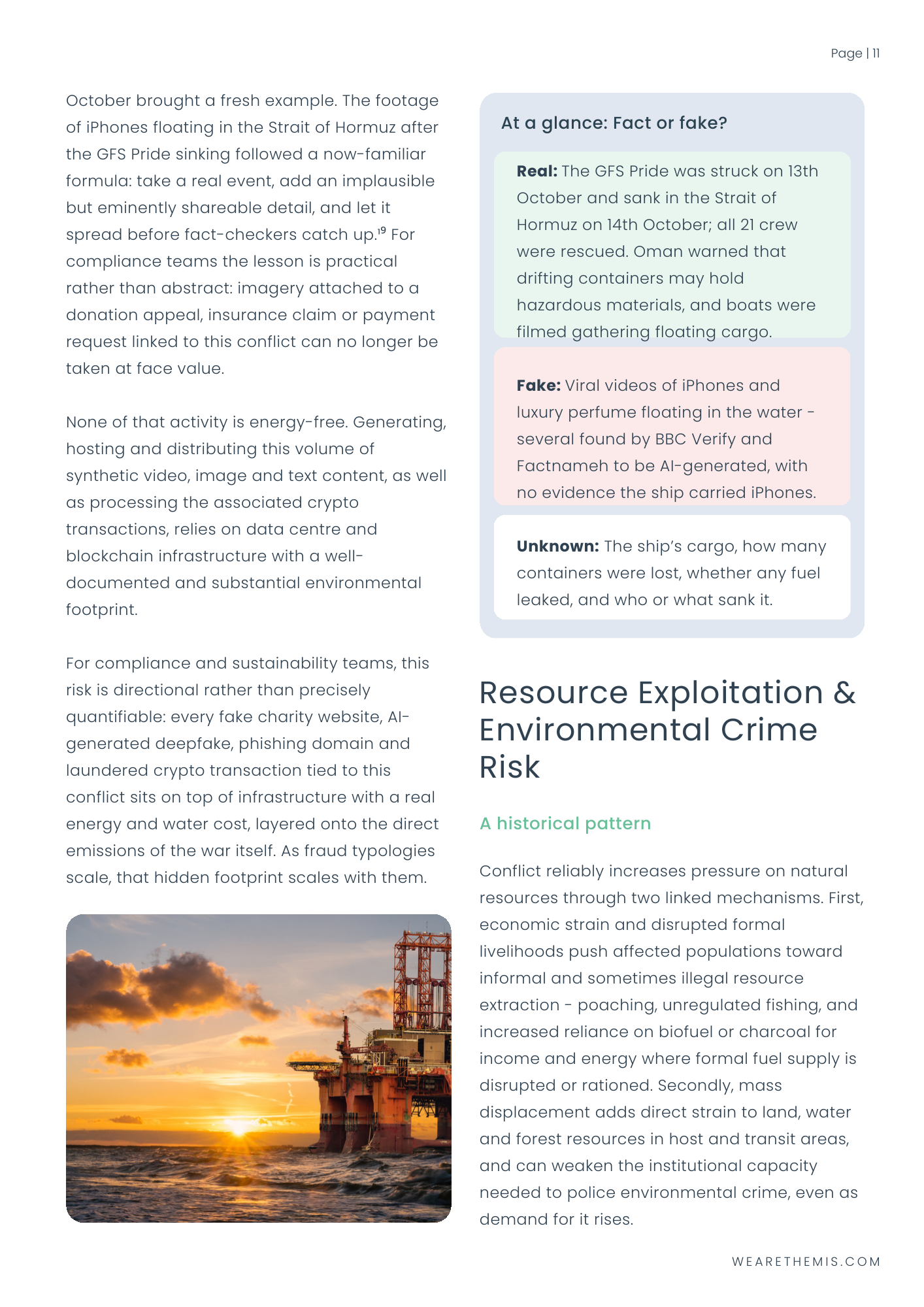
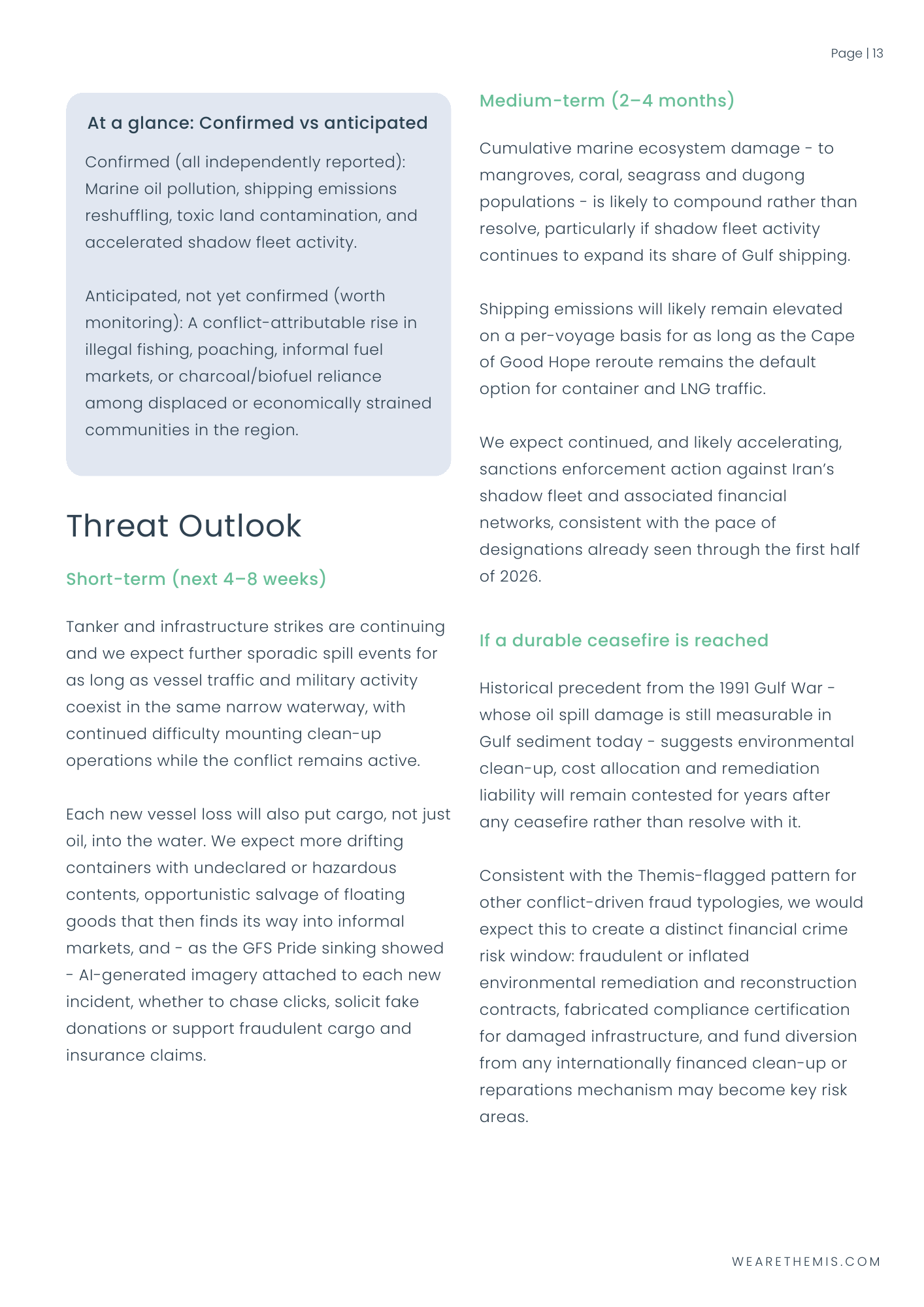
Gain valuable insights with our latest publication. Get your copy now to explore key findings, expert analysis and practical recommendations for managing shadow fleet, fraud and environmental crime risk.







Lorem ipsum dolor sit amet, consectetur adipiscing elit, sed do eiusmod tempor incididunt ut labore et dolore magna aliqua. Ut enim ad minim veniam, quis nostrud exercitation ullamco laboris nisi ut aliquip ex ea commodo consequat. Duis aute irure dolor in reprehenderit in voluptate velit esse cillum dolore eu fugiat nulla pariatur.
Block quote
Ordered list
Unordered list
Bold text
Emphasis
Superscript
Subscript
